
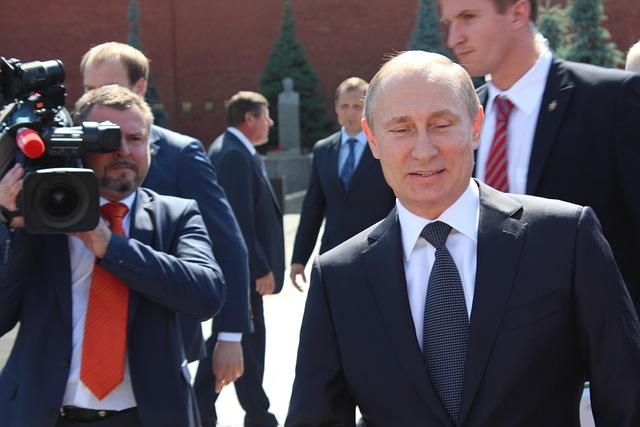
Russian President Vladimir Putin has acknowledged that Ukrainian drone attacks are posing significant challenges to Moscow’s military operations, marking a rare public admission of the escalating impact of Kyiv’s unmanned aerial campaign. The revelation, reported by the Financial Times, underscores the increasing role of drone warfare in the ongoing conflict and highlights the growing pressure faced by Russian forces amid a protracted and evolving battlefield landscape.
Putin Acknowledges Growing Threat Posed by Ukrainian Drone Attacks
Russian President Vladimir Putin has publicly recognized the increasing challenges posed by Ukrainian drone operations, marking a notable shift in Moscow’s rhetoric amid the ongoing conflict. In recent statements, he admitted that the use of unmanned aerial vehicles (UAVs) by Ukraine has significantly complicated Russian military efforts, raising concerns about the effectiveness of current defense measures. This acknowledgment underscores the evolving landscape of modern warfare, where relatively low-cost drone technology is proving to be a disruptive force on the battlefield.
Key points highlighted by officials include:
- Escalation in the frequency and sophistication of drone strikes targeting critical infrastructure and military positions.
- The challenge of detecting and neutralizing smaller, agile drones despite advanced air defense systems.
- Strategic adjustments that Russia is reportedly considering to mitigate drone-related vulnerabilities.
Putin’s candid admission signals a recognition of the technological edge that Ukrainian forces have gained, prompting Moscow to re-evaluate its tactical approach amid what analysts see as a growing drone threat reshaping the conflict’s dynamics.
Analysis of Drone Warfare Impact on Russian Military Strategy
Recent developments reveal a tangible shift in Russian military operations as the integration of drone technology by Ukrainian forces increasingly disrupts traditional battlefield dynamics. President Putin’s acknowledgment of the challenges posed by Ukrainian drones marks a pivotal moment in understanding the evolving nature of warfare in Eastern Europe. These unmanned aerial vehicles (UAVs) have exposed vulnerabilities within Russian logistics and reconnaissance capabilities, forcing a reevaluation of established tactics and command structures. The ability of drones to conduct precision strikes, gather real-time intelligence, and operate in contested environments without risking personnel has amplified their strategic value.
Key impacts on Russian military strategy include:
- Increased emphasis on electronic warfare and counter-drone measures to neutralize UAV threats.
- Disruption of supply lines due to enhanced aerial surveillance and targeted attacks on critical infrastructure.
- Adaptation of troop deployments to mitigate exposure to drone-enabled reconnaissance and strikes.
- Shift towards decentralized command approaches to maintain operational flexibility under constant drone observation.
These adjustments underscore a broader recognition within the Russian military of the need to modernize and innovate amid a rapidly changing combat landscape. As drone warfare continues to evolve, it remains a decisive factor influencing strategic planning and battlefield outcomes in the ongoing conflict.
Expert Recommendations for Enhancing Drone Defense Capabilities
To counter the escalating threat posed by Ukrainian drones, defense analysts emphasize a multi-layered approach integrating both technology and tactical innovation. Advanced radar systems capable of detecting small, low-flying UAVs are essential to provide early warnings. Meanwhile, the deployment of electronic warfare tools that can jam or hijack drone communication channels offers a non-destructive way to neutralize threats. Experts also highlight the importance of integrating AI-driven threat assessment platforms, which can rapidly analyze drone behavior patterns and prioritize targets, thereby reducing the burden on human operators.
Beyond technology, experts advocate for enhanced training protocols and real-time intelligence sharing among units operating in contested zones. In addition to physical counter-drone measures, they recommend establishing rapid response teams equipped to deploy countermeasures on short notice. Key strategies include:
- Utilizing portable anti-drone systems for frontline units to improve reaction time
- Investing in networked drone detection grids for comprehensive airspace monitoring
- Employing cyber operations to disrupt drone manufacturing and command infrastructure
- Increasing international cooperation to share drone threat intelligence and defense tactics
In Retrospect
As the conflict in Ukraine continues to evolve, President Putin’s acknowledgment of the challenges posed by Ukrainian drone operations marks a notable shift in the Kremlin’s narrative. This admission underscores the increasing role of unmanned aerial technology in modern warfare and highlights the persistent difficulties faced by Russian forces on the ground. Analysts will be closely watching how this development influences both military tactics and diplomatic efforts in the region moving forward.