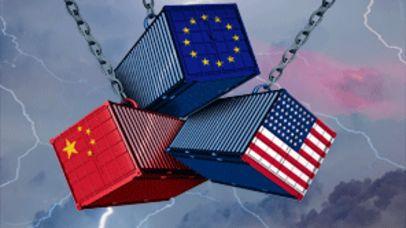
In response to President Trump’s tariffs, Canada and China have announced retaliatory measures, raising concerns of an escalating trade war. Both nations aim to protect their economies as tensions heighten in global trade relations.
Browsing: Canada
In a recent statement, former President Trump claimed that U.S. banks are barred from operating in Canada. However, experts argue that financial regulations are more nuanced, and U.S. banks often navigate specific frameworks to establish a presence internationally.
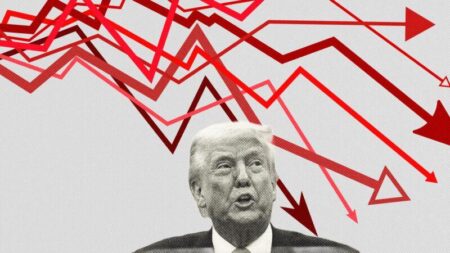
Global stock markets took a hit as President Trump announced new tariffs on Canada, Mexico, and China, escalating trade tensions and raising concerns about potential economic repercussions. Investors reacted swiftly, driving down major indices.
In light of recent statements by Lutnick, speculation is mounting around a potential tariff deal between Canada and Mexico. Market analysts will keenly monitor financial markets for reactions, particularly in sectors heavily reliant on cross-border trade.
The Associated Press reports that Trump’s tariffs on Mexico, Canada, and China target a range of goods, including agricultural products, electronics, and vehicles. This trade policy aims to bolster domestic industries but risks escalating tensions and consumer prices.
In a recent commentary, CNBC’s Lutnick suggested that President Trump may announce a reduction of tariffs on Canada and Mexico as early as Wednesday. This potential shift could reshape trade relations and impact key industries in both nations.
In a recent statement, Canadian Prime Minister Justin Trudeau criticized former President Trump’s tariffs as “dumb,” suggesting they are part of a broader strategy aimed at facilitating a potential U.S. annexation of Canada. Trudeau’s remarks underscore heightened tensions between the neighboring nations.
In a significant shift in trade policy, President Trump’s tariffs on imports from Canada, Mexico, and China have taken effect, aiming to protect American industries. Critics argue these measures could disrupt supply chains and raise consumer prices.
The Canadian dollar and Mexican peso hit one-month lows as U.S. tariffs on imports exerted downward pressure on both currencies. Analysts warn that ongoing trade tensions could further destabilize the exchange rates in the near term.
Starting Tuesday, Trump’s tariffs on imports from Canada and Mexico will take effect, affecting a range of goods. Consumers could see rising prices on products such as steel, aluminum, and certain food items as costs increase along the supply chain.
In response to controversial statements by former President Trump, many Canadians are rethinking travel plans to the U.S. Reports indicate a notable decrease in cross-border tourism, with travelers expressing feelings of alienation and disappointment.
The PDAC International Convention, the world’s premier mineral exploration and mining event, convened in Toronto, Canada, attracting thousands of industry professionals. Attendees engaged in networking, discussions on sustainability, and investment trends, highlighting the sector’s resilience.
In a bid to strengthen trade negotiations, U.S. Trade Representative Katherine Bessent urged Canada and Mexico to adopt tariffs similar to those imposed on China. This move aims to create a unified front against unfair trade practices and boost North American economic stability.
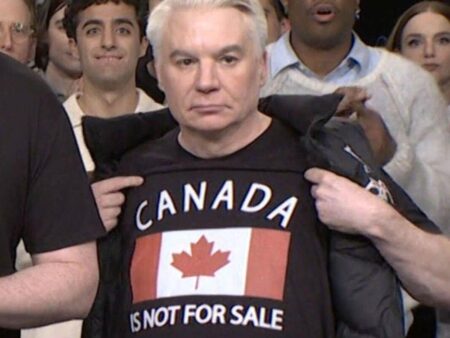
In a recent episode of “Saturday Night Live,” Mike Myers made headlines by donning a “Canada Is Not For Sale” shirt, a clear jab at Donald Trump. The iconic comedian’s choice of attire reinforced his political commentary, sparking discussions on national identity.
Former President Trump announced that tariffs on imports from Canada and Mexico will proceed, indicating potential for additional taxes in the future. The announcement underscores ongoing trade tensions as negotiations continue between the nations.
In the wake of the contentious Trump-Zelensky meeting, European allies and Canada have united in strong support for Ukraine. Leaders emphasized solidarity against Russian aggression, reaffirming commitments to bolster Ukraine’s defense and economic stability.
Canada’s economy defied expectations with a surprise annualized growth of 2.6% in the fourth quarter, according to a Reuters report. This robust performance highlights resilience amid global uncertainties, signaling potential strength in consumer spending and investments.
US Treasury Secretary Janet Yellen has urged Canada and Mexico to align their tariffs on Chinese imports, highlighting the need for a unified approach to trade policies within North America. This move aims to strengthen regional economic strategies.
Doug Ford has secured re-election as Ontario’s Premier in a contentious vote framed as a battle against the influence of Donald Trump. This victory emphasizes Ford’s appeal amid rising concerns over populism and its impact on provincial policy.
As the Trump administration implemented tariffs, numerous Canadian companies found themselves heavily dependent on American sales to mitigate the impact. This article explores the top 10 Canadian firms navigating this complex trade landscape, revealing their strategies and challenges.