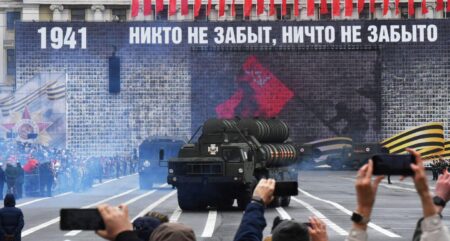
Russia is harnessing the powerful legacy of the Soviet Union’s victory over Nazi Germany to ignite a sense of national pride and unity. Through vibrant commemorative events and stirring rhetoric from the Kremlin, a compelling narrative of resilience and strength is being crafted, especially in light of today’s geopolitical challenges.
Browsing: Germany
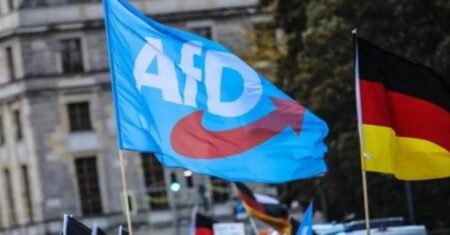
Germany’s Federal Office for the Protection of the Constitution has made a significant move by suspending the “extremist” classification of the Alternative for Germany (AfD) party. This pivotal decision arrives at a time when discussions about the party’s far-right inclinations and its influence on German politics are heating up
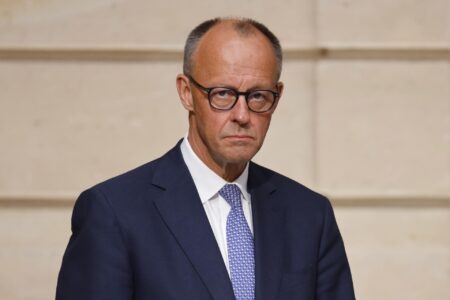
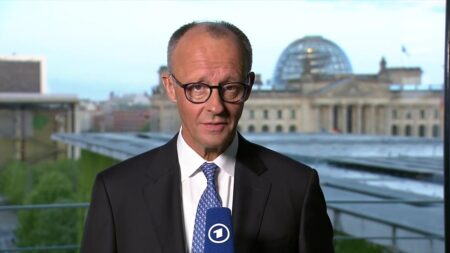
In a bold statement, German politician Friedrich Merz has sent a clear message to Donald Trump’s team: stay out of Germany’s political landscape. This call for non-involvement highlights growing worries about foreign influence in national elections, especially as geopolitical tensions continue to escalate.
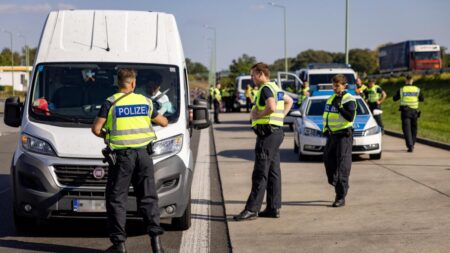
Germany’s Interior Minister has unveiled a bold new strategy: the country will now turn away undocumented migrants at its borders. This decisive action is part of a broader effort to strengthen immigration control in response to growing worries about security and integration. It marks a significant shift in Germany’s stance towards asylum seekers, reflecting the nation’s evolving priorities.
In a surprising twist for CDU leader Friedrich Merz, he fell short of the necessary votes in the initial round of the chancellorship election. As clouds of political uncertainty gather, experts are diving into potential strategies for Merz and what this could mean for Germany’s future.
A 27-year-old American has embarked on an exciting journey to Germany for medical school, lured by the incredible tuition fee of only $97 per semester. Embracing this new chapter, he enthusiastically shared, “I feel really happy here,” showcasing the amazing advantages of studying abroad.
Germany’s new chancellor, initially seen as reserved, is stepping into the spotlight with a surprisingly vibrant leadership style. As he tackles intricate domestic and international challenges, his remarkable adaptability could reshape the nation’s political landscape in exciting ways.
Germany is currently navigating through a tumultuous period that has deeply unsettled its sense of security, igniting a vibrant national dialogue about what truly matters. As the country confronts these pressing challenges, leaders are rallying around a revitalized commitment to safety and resilience in their policy-making efforts.
In April, German inflation dipped to 2.2%, just shy of what analysts had anticipated. This decrease offers a glimmer of hope in easing price pressures, yet it also underscores the ongoing hurdles facing the economy as policymakers strive to steer recovery through a landscape marked by persistent volatility.
Germany’s domestic intelligence agency has officially designated the Alternative for Germany (AfD) party as a “confirmed rightwing extremist” group. This significant classification underscores escalating worries about the party’s sway and the increasing tide of extremist sentiments sweeping across the nation
In “A History Lesson in Germany: Avoiding a Return to the Worst Moments,” R. Bruce Anderson passionately highlights the vital need to remember Germany’s haunting past. He compellingly argues that grasping the lessons of historical atrocities is essential for ensuring they never happen again in our contemporary world.
As the Vatican gears up for a crucial conclave, the atmosphere is charged with external pressures from influential nations such as Germany and China. These countries are eager to shape the election of the next pope, sparking worries about how their involvement might impact the Church’s direction and independence.
Germany’s vital infrastructure is under mounting pressure from a wave of security challenges, ranging from sophisticated cyberattacks to tangible physical threats. With global tensions escalating, experts are calling for robust measures to safeguard essential services, reinforcing our resilience against any potential disruptions.
Poland is sounding the alarm over Germany’s recent introduction of new border checks, expressing worries that these actions could throw a wrench in the smooth operation of the EU’s single market. Officials are voicing their concerns that heightened barriers might obstruct the free flow of goods and services, potentially shaking up regional trade dynamics
Germany’s recent decision to label the far-right Alternative for Germany (AfD) party as an “extremist” group has ignited a wave of criticism from the United States. Detractors contend that this classification threatens the very essence of democratic dialogue, fueling fears of political repression and stifling diverse viewpoints
In a bold political move, Germany’s government has officially branded far-right factions as ‘extremists,’ sparking fierce backlash from MAGA supporters. This classification underscores escalating worries about the surge of nationalism and its potential impact on global democracy.
Germany’s grid regulator has confidently stated that a power outage similar to those experienced in Iberia is unlikely to occur in the country. As investigations unfold across Europe into the recent blackouts, authorities are diligently working on strengthening grid resilience to ensure that such disruptions remain a thing of the past.
Germany’s far-right AfD party is under the spotlight as lawmakers engage in heated discussions about a possible ban. With worries mounting over its extremist rhetoric and growing influence, the government is considering legal measures that could dramatically alter the political landscape.
Germany’s new government has garnered enthusiastic support from its coalition partner, setting the stage for a cohesive strategy on crucial domestic and international matters. This endorsement represents a pivotal moment in fostering stability as the nation navigates through ongoing challenges
European markets are experiencing a surge of volatility as political unrest in France and Germany sends ripples of concern through the investment community. With proposed reforms hanging in the balance and government stability under scrutiny, traders across the continent are adopting a more cautious approach.