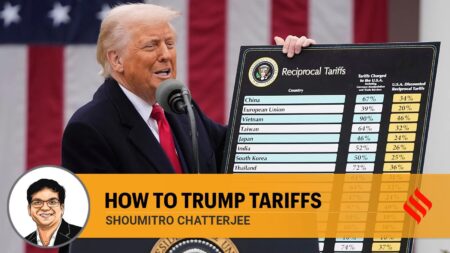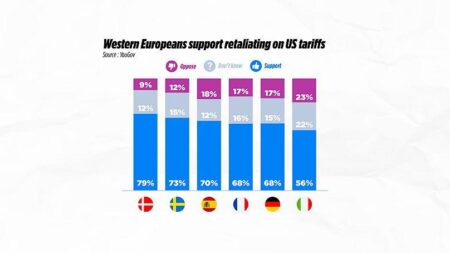
In response to rising global trade tensions, EU countries are implementing protective tariffs to shield domestic industries. This move aims to bolster competitiveness and safeguard jobs, signaling a shift towards more aggressive trade defense strategies.
Browsing: Germany
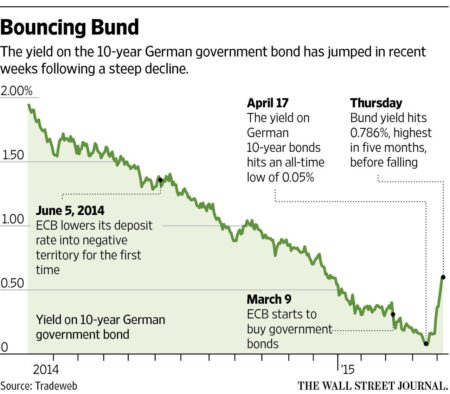
In a flight to safety amid global economic uncertainty, investors are increasingly turning to German government bonds. With their reputation for stability, these bonds offer a refuge from market volatility, reflecting growing concerns over inflation and geopolitical tensions.
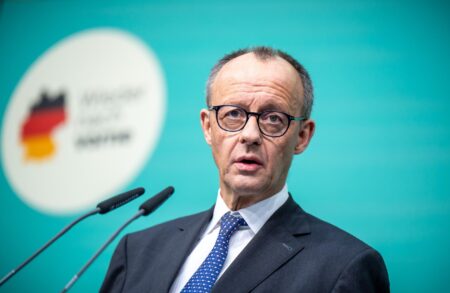
Germany’s opposition leader, Friedrich Merz, has unveiled a coalition deal aimed at stimulating economic growth and addressing migration challenges. The agreement seeks to unite various factions in a bid to bolster Germany’s stability and prosperity.
A recent map reveals the extent of gold reserves stored by various countries in the United States, highlighting Germany’s consideration of repatriating its gold. As global economic concerns rise, this move sparks debate on the security and accessibility of national assets.
Germany has officially formed a new government, unveiling plans to reduce corporate taxes as part of its economic strategy. The move aims to boost investment and competitiveness amid global economic challenges, signaling a shift in fiscal policy.
Germany’s Friedrich Merz has finalized a coalition deal aimed at addressing the rising challenges posed by a resurgent Trump administration. The agreement underscores the urgency for European leaders to unify against potential political shifts across the Atlantic.
German chancellor-designate Friedrich Merz emphasized the advantages of EU unity in response to shifting Trump tariffs. He highlighted that a coordinated stance among member states can better protect their economies against external pressures.
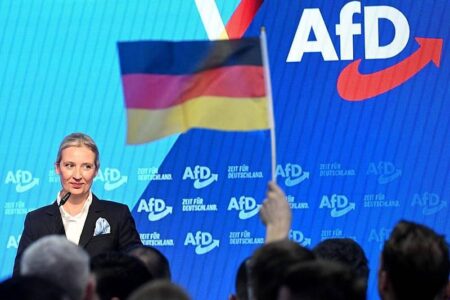
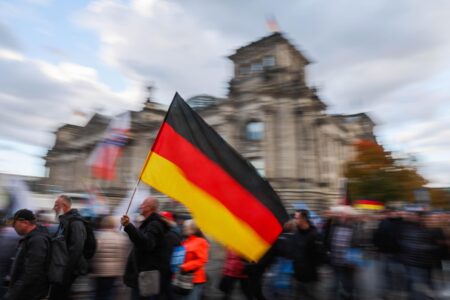
The Alternative for Germany (AfD) has surged to prominence, becoming the country’s most popular party amid rising concerns over immigration and economic instability. Analysts attribute this momentum to a growing discontent with traditional political parties and their handling of pressing issues.
Following the recent coalition agreement, CDU leader Friedrich Merz announced that Germany is “back on track” to address pressing issues. The coalition aims to enhance economic stability and bolster unity amid ongoing challenges in the European landscape.
Germany is on high alert following a series of attacks amid growing speculation of Russian influence. Authorities are investigating potential links, although officials urge caution, emphasizing the need for thorough assessments before drawing conclusions.
Germany has suspended its UN refugee resettlement program, reflecting the priorities of its new coalition government, which is poised to adopt a less welcoming stance towards migrants. This shift raises concerns about the country’s commitment to humanitarian efforts.
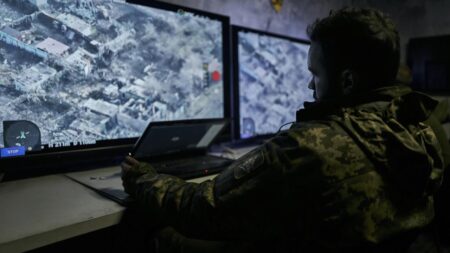
Former top Ukrainian commander Valerii Zaluzhnyi has confirmed the establishment of a joint U.S.-Ukrainian command center in Germany. This move aims to enhance military coordination and support for Ukraine amid ongoing tensions with Russia.
In a startling directive, the German government has urged educators to prepare children for potential conflict, a move that has sparked widespread concern. Meanwhile, a former MI6 chief has issued a grave warning to the UK, highlighting rising tensions in Europe.
German officials are raising concerns about the validity of the $109 billion in U.S. gold reserves, demanding verification of bullion bars held at the New York Federal Reserve. This request could have significant implications for international gold holdings.
Germany is contemplating the withdrawal of its 1,200-ton gold reserves stored in the U.S., a move seen as a response to rising tensions during Donald Trump’s presidency. This potential action highlights ongoing concerns over international trust and economic security.
Germany has invoked post-Holocaust doctrine to justify the deportation of pro-Palestinian protesters, citing concerns over rising antisemitism. The move has sparked controversy, with critics alleging it undermines free speech and civil rights.
Germany has activated 5,000 troops to bolster NATO’s eastern flank, responding to heightened tensions in Eastern Europe. This move underscores a commitment to collective defense as regional security concerns continue to escalate amidst ongoing geopolitical challenges.
In a striking parallel, the tactics utilized by Donald Trump and the German government to suppress pro-Palestine activism reveal a shared approach to criminalize dissent. This strategy raises concerns over free speech and the right to protest in democratic societies.
Germany’s outgoing government has hailed success in addressing irregular immigration, citing a significant drop in undocumented arrivals. Officials attribute this progress to enhanced border controls and cooperation with neighboring countries.
Germany’s Chancellor Olaf Scholz has announced the EU’s readiness to respond to potential U.S. trade tariffs, emphasizing the bloc’s commitment to uphold fair trade practices. The statement signals a unified approach to address transatlantic trade tensions.