Germany’s parliament has passed a landmark package aimed at significantly increasing defense spending. This move is intended to bolster military capabilities and respond to shifting security dynamics in Europe, reflecting a commitment to NATO obligations.
Browsing: defense industry
Norway and Germany have joined forces to enhance the maintenance of the Naval Strike Missile, a pivotal asset for naval warfare. This collaboration aims to strengthen defense capabilities in Europe, ensuring operational readiness and advanced military technology.
Italy is set to unveil a strategic plan aimed at integrating its automotive and defence sectors, as announced by the Minister of Economic Development. This initiative seeks to enhance technological collaboration and bolster national security through innovative manufacturing practices.
Germany’s military expansion efforts are ongoing, spurred by heightened security concerns. However, the nation faces significant personnel shortages, hampering its ability to fully operationalize new capabilities. This dichotomy raises questions about future readiness.
Germany’s shift towards a robust economic model, spurred by increased defense spending and sustainability initiatives, presents unique investment opportunities. Sectors like renewable energy and technology are poised to thrive amid this transformation.
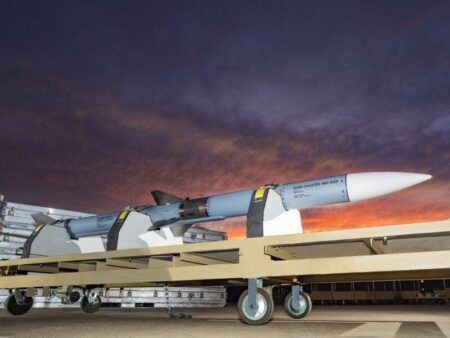
In a strategic move to bolster national security, France, Italy, and the UK have ordered additional air defense missiles, as reported by Le Monde. This decision reflects rising concerns over aerial threats and emphasizes a unified commitment to enhancing defense capabilities across Europe.
Brazil is set to begin construction of 11 new NPa500MB offshore patrol vessels as part of its commitment to enhancing maritime security. These modern ships will bolster the country’s naval capabilities and ensure safer waters for trade and environmental protection.
Ukraine has effectively neutralized Russia’s glide bombs, once deemed unstoppable. Through advanced countermeasures and improved air defense systems, Ukrainian forces have significantly diminished the impact of these precision munitions on the battlefield.
In response to evolving geopolitical dynamics, Airbus Defense and Space CEO asserts that Germany must decrease its dependence on U.S. arms. This shift aims to enhance Europe’s defense autonomy and adapt to emerging security challenges.
The U.K. has solidified a new defense agreement to provide Ukraine with advanced attack drones, reinforcing its commitment to support Ukraine amid ongoing conflict. This strategic partnership aims to enhance Ukraine’s military capabilities and defense resilience.
Turkey’s Baykar has joined forces with Italy’s Leonardo to collaborate on advanced drone technology. This partnership seeks to enhance defense capabilities and innovation in unmanned aerial systems, marking a significant step in international aerospace relations.
Germany is rethinking its fiscal constraints to bolster European defense capabilities, signaling a shift in its long-standing budgetary policies. This move aims to enhance military readiness and strengthen NATO partnerships amid rising geopolitical tensions.
India’s recent advancements in defense technology are poised to reshape the global landscape, particularly in strategic partnerships and military capabilities. As the nation boosts its defense spending and innovation, the implications for regional and international security dynamics are significant.
The Center for Strategic & International Studies highlights the importance of strengthening defense industrial cooperation between Australia and the United States. Enhanced collaboration is crucial for addressing shared security challenges and fostering regional stability.
A recent report from AirForceTimes.com suggests that the United States may be preparing to establish a nuclear program based in the United Kingdom. This development raises significant implications for international security and defense collaboration between the two nations.
Germany’s Friedrich Merz is engaged in challenging negotiations aimed at increasing the nation’s defense budget. As international security concerns rise, the discussions reflect the balancing act between fiscal restraint and military readiness.
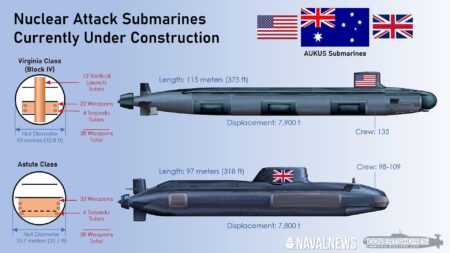
The NDIA emphasizes that while AUKUS reforms are progressing, significant challenges remain. Effective collaboration, resource allocation, and policy alignment among the U.S., UK, and Australia are crucial for the partnership’s long-term success in national defense.