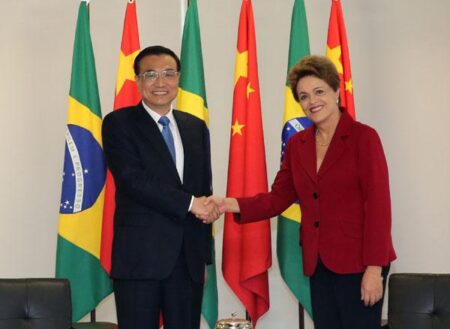
In a bold step to enhance their partnership, Chinese President Xi Jinping and Brazilian President Luiz Inácio Lula da Silva have ramped up their meetings, forging stronger connections as they navigate the shifting landscape of U.S. politics with the potential return of Donald Trump.
Browsing: global politics
In a significant meeting in Moscow, Russian President Vladimir Putin engaged in vital discussions with Qatar’s Emir Tamim bin Hamad Al Thani. Their conversation centered on the pressing crises in Syria and Gaza, highlighting the urgent need for diplomatic solutions. Together, they explored ways to bolster regional stability amidst rising tensions, emphasizing their commitment to fostering peace and cooperation.
France has boldly reaffirmed its backing for former President Donald Trump’s ambitious proposal to bring an end to the ongoing war in Ukraine. This endorsement marks a significant potential shift in diplomatic efforts, highlighting the importance of dialogue and negotiation as key pathways to resolving the conflict.
China has voiced its apprehensions regarding former President Trump’s ambitious $1 trillion Pentagon budget, perceiving it as a potential threat to regional stability. Officials warn that this surge in military spending could heighten tensions across the Asia-Pacific, emphasizing the urgent need for diplomatic solutions
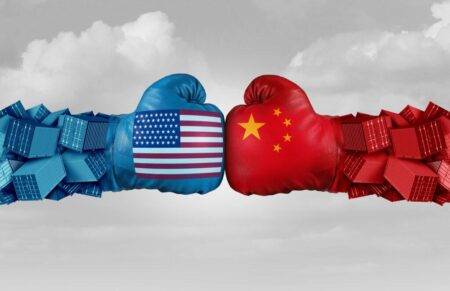
Tensions are rising as the US and China vie for influence over the Panama Canal, a crucial trade route. Panama finds itself in the middle of a diplomatic tug-of-war, with leaders navigating the complex geopolitical landscape amid escalating rhetoric.
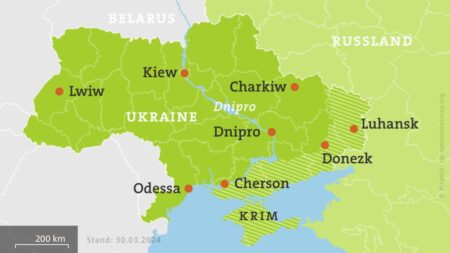
China has officially denied claims that its citizens are fighting alongside Russian forces in Ukraine. The statement comes amid rising concerns over foreign involvement in the conflict, as international scrutiny intensifies on China’s stance in the war.
In a startling directive, the German government has urged educators to prepare children for potential conflict, a move that has sparked widespread concern. Meanwhile, a former MI6 chief has issued a grave warning to the UK, highlighting rising tensions in Europe.
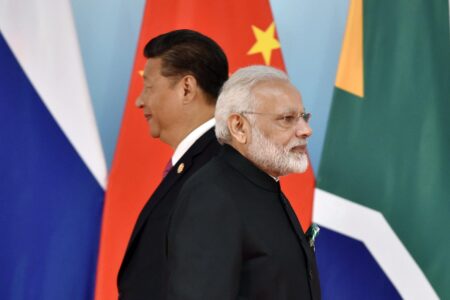
In the backdrop of heightened tensions, Indian Prime Minister Narendra Modi seeks to navigate a complex geopolitical landscape to foster improved relations with China. With ongoing border disputes and economic challenges, a thaw could reshape regional stability and cooperation.
In a recent statement, a senior Chinese diplomat addressed U.S. critics of China’s policies, inviting them to visit the country firsthand. He emphasized the importance of direct engagement for a clearer understanding of China’s complexities and advancements.
In light of the growing divisions fueled by former President Trump’s policies, the G7 nations are leveraging the “China card” to foster unity. By addressing shared concerns regarding China’s influence, they aim to reinforce collaboration among member states.
A Russian negotiator described recent talks with U.S. officials regarding Ukraine as “useful,” indicating a potential shift in diplomatic efforts. He emphasized the importance of involving the United Nations to facilitate negotiations and achieve lasting peace.
Russia and Ukraine are set to engage in U.S.-mediated talks in Riyadh, aiming to address ongoing tensions and conflicts in the region. Key diplomatic stakeholders hope this meeting will pave the way for a potential resolution and enhanced dialogue.
In a strategic assessment of the ongoing conflict, Al Jazeera English reports that Vladimir Putin may achieve his objectives in Ukraine amidst shifting dynamics. With international responses evolving, the implications for the region remain critical and far-reaching.
As the U.S. faces a tumultuous political climate under Trump, Canada seeks to strengthen ties with European allies, reaffirming its identity as the “most European non-European country.” This strategic pivot aims to bolster trade and security amidst uncertainty.
In recent comments, Trump highlighted the strategic significance of Ukraine’s Zaporizhzhia Nuclear Power Plant in negotiations with Putin, raising concerns about its safety amid ongoing conflict. The future of the facility remains uncertain as tensions escalate.
In a recent address, PM Pedro Sánchez emphasized Spain’s responsibility to support nations threatened by Russian aggression. He called for increased solidarity within the European Union, urging member states to bolster diplomatic and military assistance to ensure regional stability.
China’s diplomatic engagement in the Middle East is often perceived as a presence without substantial impact. While Beijing seeks to enhance its influence, regional players question the depth of its commitments amid evolving geopolitical dynamics.
In a firm response to U.S. Senator Marco Rubio, Canadian Foreign Minister Mélanie Joly asserted, “Canada’s sovereignty is not up for debate, period.” Her statement underscores Canada’s commitment to defending its territorial integrity amidst international discussions.
Polish President Andrzej Duda emphasized that the presence of US nuclear weapons in Poland would serve as a vital deterrent against potential aggression from Russia. This statement underscores Poland’s growing security concerns amid escalating regional tensions.
Recent discussions have emerged around the U.S. approach to destabilizing nations, with new claims suggesting that its actions in Canada are unusually open. Analysts debate whether this represents a new strategy or a calculated misinformation campaign.