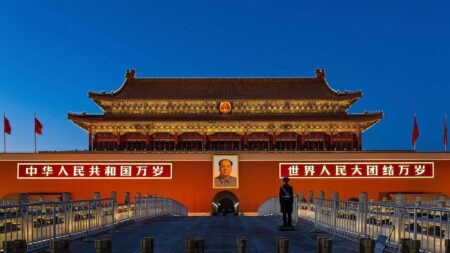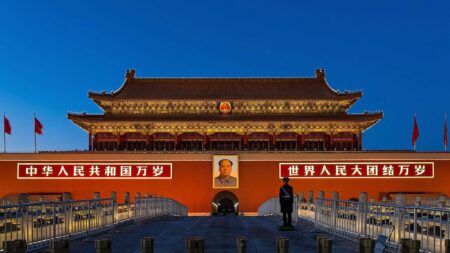
China’s diplomatic engagement in the Middle East is often perceived as a presence without substantial impact. While Beijing seeks to enhance its influence, regional players question the depth of its commitments amid evolving geopolitical dynamics.
Browsing: global politics
In a firm response to U.S. Senator Marco Rubio, Canadian Foreign Minister Mélanie Joly asserted, “Canada’s sovereignty is not up for debate, period.” Her statement underscores Canada’s commitment to defending its territorial integrity amidst international discussions.
Polish President Andrzej Duda emphasized that the presence of US nuclear weapons in Poland would serve as a vital deterrent against potential aggression from Russia. This statement underscores Poland’s growing security concerns amid escalating regional tensions.
Recent discussions have emerged around the U.S. approach to destabilizing nations, with new claims suggesting that its actions in Canada are unusually open. Analysts debate whether this represents a new strategy or a calculated misinformation campaign.
As US-China tensions continue to escalate, navigating the complex landscape of diplomatic relations is crucial. From trade disputes to military posturing, understanding the implications of this rivalry is essential for global stability and economic health.
Ukraine’s agreement to Donald Trump’s ceasefire proposal places significant pressure on President Putin to respond. Analysts suggest this development could shift negotiations and redefine the dynamics of the ongoing conflict in Eastern Europe.
In today’s complex geopolitical landscape, a media-savvy ambassador could significantly enhance the US-UK relationship. By effectively navigating public opinion and utilizing social media, such an envoy could foster deeper bilateral ties and mutual understanding.
In a surprising shift, Russian officials have softened their rhetoric towards the United States, fostering speculation about potential diplomatic thawing. Analysts suggest this change may reflect a desire for economic stability amid international pressures.
China has issued a stern warning to the United States against any attempts at containment, particularly in light of the potential for Donald Trump’s second term to reshape diplomatic relations. Tensions rise as both nations navigate a complex geopolitical landscape.
In a recent statement, former President Trump threatened renewed sanctions on Russia, calling for immediate peace negotiations following significant military escalations in Ukraine. His remarks highlight an ongoing concern about the conflict’s broader implications on global stability.
France is mobilizing for a ‘wartime economy’ in response to the growing tensions in Ukraine, as U.S. support appears to wane. Paris aims to bolster military production and resources, underscoring its commitment to European security amidst shifting global dynamics.
In response to evolving geopolitical dynamics, Airbus Defense and Space CEO asserts that Germany must decrease its dependence on U.S. arms. This shift aims to enhance Europe’s defense autonomy and adapt to emerging security challenges.
In a recent statement, Indian External Affairs Minister S. Jaishankar remarked that the anticipated shift in U.S. foreign policy under former President Trump is likely to benefit India in various aspects. He emphasized the alignment of interests between the two nations.
Ukrainian President Volodymyr Zelenskyy arrived at an emergency Europe summit, facing mounting pressure from both the US and Russia. The discussions focus on escalating tensions and the ongoing conflict in Ukraine, seeking pathways to de-escalation and support.
Australia’s Foreign Minister has voiced concerns that Donald Trump’s second term is proving to be even more disruptive than his first. This assessment reflects growing international apprehension over Trump’s evolving foreign policy and domestic decisions.
Germany’s upcoming election promises to significantly influence Europe’s stance toward a more assertive Trump administration. As voters head to the polls on Sunday, the future of key policies on transatlantic relations and global cooperation hangs in the balance.
In a significant move, the UN General Assembly passed a resolution condemning Russia’s aggression in Ukraine amid shifting global alliances. The vote reflects growing international consensus against the invasion, emphasizing the need for diplomatic resolution and accountability.
In the wake of the contentious Trump-Zelensky meeting, European allies and Canada have united in strong support for Ukraine. Leaders emphasized solidarity against Russian aggression, reaffirming commitments to bolster Ukraine’s defense and economic stability.
Western leaders made a significant visit to Kyiv on the war’s third anniversary, reaffirming their commitment to supporting Ukraine against Russia. The pledges include enhanced military aid, underscoring a united front in the ongoing conflict.
A recent report from Voice of America suggests that the much-lauded partnership between Russia and China may be overstated. Despite their strategic alignment on various issues, underlying tensions and divergent interests could undermine their cooperation.