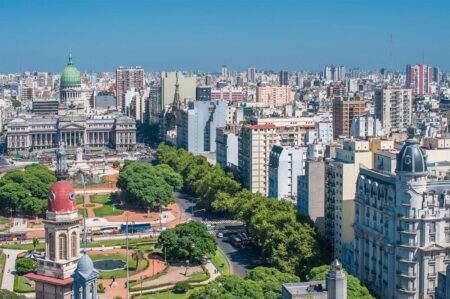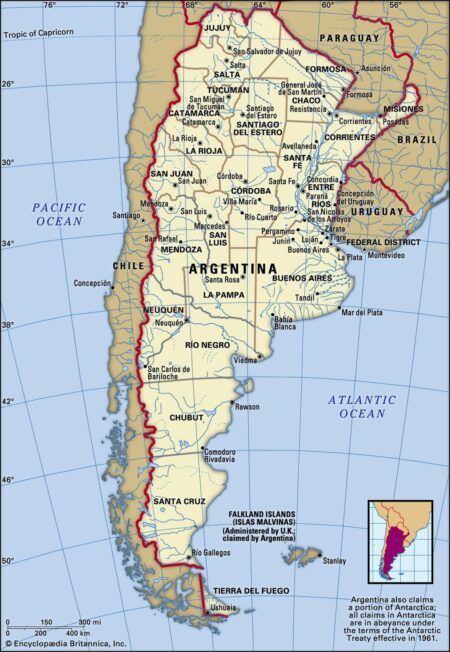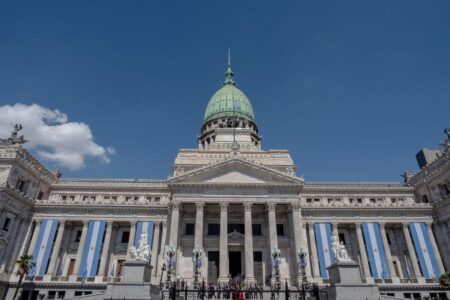
Argentina’s recent $20 billion financial rescue has sparked crucial discussions about its economic trajectory. Experts are diving deep into pressing topics like debt sustainability, strategies for controlling inflation, and the potential effects on social stability as the nation navigates ongoing challenges.
Browsing: IMF
The International Monetary Fund has adjusted its growth forecast for the UK, reflecting the persistent influence of Trump’s tariffs on the global economy. This revised outlook raises alarms about escalating trade tensions and their far-reaching consequences for economic stability.
The IMF and World Bank have greenlit exciting new bailout packages for Argentina, designed to bolster its economy in the face of persistent inflation challenges. These vital measures are set to offer essential support as the nation charts a course through financial uncertainty.
Argentina’s recent IMF deal marks a critical financial maneuver aimed at stabilizing its economy. Negotiations involved stringent fiscal reforms and commitments to reduce inflation, showcasing the government’s resolve to navigate ongoing economic challenges.
In a significant economic shift, President Javier Milei has announced the end of Argentina’s strict currency controls, known as the “cepo,” following the IMF board’s approval of a US$20-billion bailout. This move aims to restore market confidence amid ongoing financial turmoil.
The International Monetary Fund (IMF) has confirmed a preliminary agreement with Argentina for a $20 billion loan aimed at stabilizing the country’s economy. This funding is expected to bolster Argentina’s financial situation amid ongoing challenges.
Argentina has secured a $20 billion deal with the International Monetary Fund (IMF) to support President Javier Milei’s ambitious economic reforms. The agreement aims to stabilize the nation’s economy amid ongoing inflation and fiscal challenges.
Argentina has formally requested the first tranche of over 40% of its $20 billion loan program from the International Monetary Fund (IMF). This financial assistance aims to stabilize the country’s economy amid ongoing fiscal challenges and inflation concerns.
Argentina’s Lower House has overwhelmingly approved a controversial deal with the IMF following President Javier Milei’s proposals. The decision, seen as crucial for stabilizing the nation’s economy, sparks debate over its long-term implications for citizens.
Argentina’s economy is poised for continued growth as negotiations for a new accord with the IMF progress. This potential agreement aims to stabilize economic conditions, fostering investor confidence and addressing ongoing challenges in the nation’s financial landscape.
The recent discussions at the Council on Foreign Relations highlight the intricate relationship between the iPhone’s global supply chain, the IMF’s fiscal policies, and China’s shifting balance of payments, signaling potential implications for international trade dynamics.