
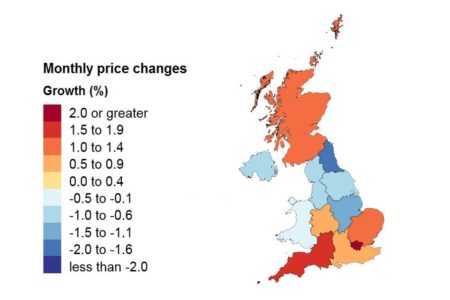
UK house prices have surged the most in two years, according to the Office for National Statistics (ONS). The increase reflects growing demand amid limited housing supply, signaling a potential recovery in the property market.
UK house prices have surged the most in two years, according to the Office for National Statistics (ONS). The increase reflects growing demand amid limited housing supply, signaling a potential recovery in the property market.

Recent inflation data from France and Spain, coupled with insights from the ECB survey, strengthen the argument for potential rate cuts. Analysts suggest that easing monetary policy could address persistent economic challenges in the Eurozone.

U.K. inflation fell to 2.8% in February, offering a temporary reprieve for consumers and policymakers. However, analysts warn that factors such as rising energy costs and supply chain disruptions could drive prices up again shortly.

Germany’s recent surge in spending, aimed at bolstering its economy post-pandemic, is raising concerns within the EU. Critics warn that this financial splurge could disrupt budgetary stability across member states, triggering anxiety about fiscal discipline in the bloc.

Javier Milei’s economic policies in Argentina have garnered attention as a potential “inflation miracle,” but analysis indicates that outdated items in the inflation index may skew perceptions of economic recovery. As critics examine the data, the true impact remains uncertain.

The cost of pet ownership is set to rise, impacting millions of dog and cat owners. From increased food prices to higher veterinary fees, the financial burden of caring for our furry companions is expected to grow significantly in the coming months.

Argentina’s inflation rate is projected to increase marginally in February, according to a Reuters poll. Analysts anticipate ongoing economic challenges will contribute to persistent price rises, keeping inflationary pressures at the forefront of national concerns.
Japan’s inflation rate has slowed more than anticipated, yet remains elevated, prompting speculation about the Bank of Japan’s potential interest rate hikes. Analysts suggest that persistent price pressures may force the central bank to act sooner than expected.

UK wage growth remains stable at 5.9%, according to the latest Financial Times report. This consistent growth could signal resilience in the labor market, despite ongoing economic challenges and inflationary pressures affecting consumers.

Brazil’s central bank has raised interest rates to their highest level since 2016, signaling a cautious approach towards future hikes. With inflation concerns in mind, officials indicate that smaller increases may be on the horizon to balance economic growth and stability.

The OECD warns that the Bank of Canada may have to raise interest rates by up to 1.25% in the event of a full-blown tariff war. This increase aims to combat inflationary pressures stemming from heightened trade tensions, impacting economic stability.

The UK economy showed signs of stagnation in January, highlighting the growing challenges for Shadow Chancellor Rachel Reeves. This downturn raises critical questions about the government’s economic strategy and its impact on future growth.

Brazil’s economy is projected to grow by 3.4% in 2024, driven by robust domestic demand. However, recent indicators of year-end weakness suggest that further interest rate hikes may be limited, prompting analysts to reassess monetary policy outlooks.

Argentina’s monthly inflation rate saw a slight uptick in February, aligning with analysts’ expectations. The increase reflects ongoing economic challenges, including rising prices in essential goods, as the country continues to navigate its financial recovery.

In a stark reversal from his optimistic forecasts, former President Trump now warns Americans of impending economic turbulence. As inflation rises and market volatility persists, many are questioning the sustainability of his earlier promises of a robust economic boom.

Germany may face a recession due to potential U.S. tariffs, warns Bundesbank chief. The trade barriers could impact the country’s export-driven economy, raising concerns over growth prospects and prompting calls for policy adjustments.

India is grappling with economic uncertainty as escalating US tariff wars raise global concerns. The increasing trade tensions threaten to disrupt supply chains and impact key sectors, prompting calls for robust policy measures to safeguard India’s growth trajectory.

Japan’s 10-year government bond yield has reached its highest level since 2008, driven by investor speculation regarding potential interest rate hikes by the Bank of Japan. This shift marks a significant change in the country’s longstanding monetary policy stance.

The Bundesbank has acknowledged that increased German spending is justified in the current economic climate, yet it cautions that such measures alone will not resolve deeper structural issues. Experts urge a balanced approach to ensure sustainable growth.

Japan’s largest union group is calling for the most significant wage increase since 1993, emphasizing the need to combat rising living costs and enhance worker livelihoods. This demand comes as inflation pressures mount, prompting a potential shift in corporate wage policies.