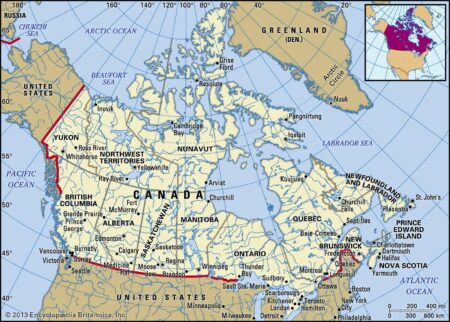
In “Opinion | Trump’s bullying is turning Canada from friend to foe,” The Washington Post explores how aggressive rhetoric and policies from the Trump administration have strained U.S.-Canada relations, shifting perceptions of allyship into conflict.
Browsing: nationalism
In the 1930s, a bold movement sought to merge the US, Canada, and Greenland, envisioning a unified North America. This initiative highlights historical aspirations for regional cooperation, echoing modern discussions on trade, environmental challenges, and cultural ties.
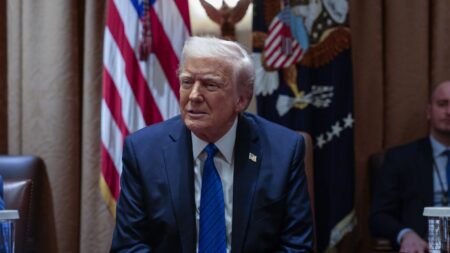
In a recent tirade, former President Donald Trump directed his ire toward Canada, describing its leaders with “the eyes of a predator.” The comments, reflecting ongoing tensions, highlight Trump’s confrontational approach to international relations and border policy.
France has issued a symbolic call for the return of the Statue of Liberty to its European roots, emphasizing its significance as a beacon of freedom. However, experts suggest that political, cultural, and legal complexities make such a restoration unlikely.
The grave of 17th-century Mughal emperor Aurangzeb has become a contentious symbol in India, igniting debates over religious identity and historical legacy. As tensions rise, the site reflects broader societal divides and the challenges of reconciling the past with modern values.
As perceptions shift, Canada’s traditional alignment with US exceptionalism is diminishing. This trend reflects growing skepticism about American values and policies, prompting Canada to seek a more independent global stance and redefine its own national identity.
In a recent statement, Canada’s new Prime Minister Mark Carney reaffirmed the nation’s sovereignty amidst escalating trade tensions with the U.S., declaring, “Canada will never be part of the US.” His remarks underscore a commitment to maintaining Canadian independence in negotiations.
In response to Trump’s tariffs, a growing “Boycott USA” movement has emerged globally. This backlash reflects discontent among countries impacted by trade barriers, leading to calls for consumers to reject American products in favor of local alternatives.
In a decisive victory, Mark Carney, newly elected Prime Minister of Canada, emphasized national sovereignty, stating, “Canada will never ever be part of America.” His remarks resonate amid ongoing debates about Canadian identity and independence in a globalized world.
Many Chinese observers perceive a cultural revolution unfolding in the United States, marked by heightened political polarization, social justice movements, and shifting norms. This evolving landscape prompts reflections on their own societal dynamics and values.
In a Bosnia region known for its pro-Russian sentiment, locals are expressing enthusiasm over Donald Trump’s potential return to the White House. The community views his policies as favorable towards their interests, reflecting growing geopolitical complexities.
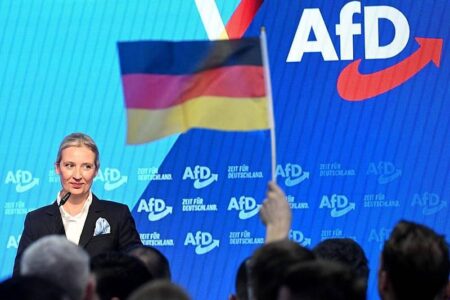
As Germany’s political landscape shifts rightward, experts from the Atlantic Council analyze the implications of the recent election results. They delve into how this trend could reshape Germany’s domestic policies and its role in the European Union.
Far-right leaders converged in Spain, uniting under the banner of “Make Europe Great Again.” This rally underscored the rising influence of nationalist movements across the continent, as participants advocated for strict immigration policies and national sovereignty.
Germany’s far-right party, AfD, has doubled its vote share in recent elections, signaling a significant shift in the country’s political landscape. This surge raises concerns about the influence of extremism and poses challenges for traditional parties in maintaining stability.
In “Triumph of Il Duce,” The Times explores Italy’s complex relationship with Mussolini, highlighting how nostalgia for his era persists amidst ongoing debates about fascism, identity, and historical memory in modern Italian society.
Rising tensions between France and Algeria are fueled by historical grievances, including colonial legacies and recent diplomatic disputes. The “insult to injury” sentiment reflects deep-rooted frustrations that continue to shape their complex relationship.
In “MAXIMILIAN RAYNOR AND HIS UN-UNITED KINGDOM,” Wonderland Magazine explores the innovative vision of Raynor, a transformative figure reshaping contemporary British culture. His work challenges traditional narratives, promoting unity through diversity amid a fragmented society.
Germany’s chancellor-in-waiting emphasizes the need for “real” independence from US influence, advocating for a more autonomous foreign policy. As global dynamics shift, questions arise about the feasibility of this vision and its implications for transatlantic relations.
A teenager and his parents were detained for allegedly chanting “anti-national slogans” during the India-Pakistan cricket match. Authorities are investigating the incident, emphasizing a zero-tolerance policy towards actions deemed as threats to national integrity.
France’s far-right leader Jordan Bardella canceled his scheduled speech in the U.S. following a controversy involving former Trump aide Steve Bannon, who made a gesture reminiscent of Nazi salutes. The incident underscores tensions surrounding far-right movements.