

Leaders from Canada and Mexico convened to strategize their response to recent trade actions by the U.S. The discussions focused on strengthening economic ties and formulating a united front to address ongoing trade disputes and tariffs.
Leaders from Canada and Mexico convened to strategize their response to recent trade actions by the U.S. The discussions focused on strengthening economic ties and formulating a united front to address ongoing trade disputes and tariffs.
As demand for air travel between Canada and the US continues to dwindle, airlines are adjusting strategies to navigate the shifting landscape. OAG’s latest aviation market analysis reveals how carriers are refining routes and fares to remain competitive.
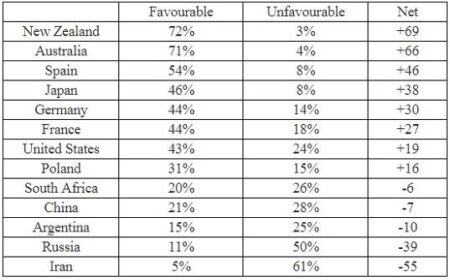
A recent AP-NORC survey highlights that the UK and Canada are perceived as the United States’ closest allies. This strong alliance reflects shared values, security cooperation, and economic ties, reinforcing the importance of transatlantic relationships in global politics.

Canadian Prime Minister Justin Trudeau has issued a stark warning about the future of the US-Canada relationship, citing increasing trade threats as a catalyst for potential fundamental changes. This escalating tension could reshape their long-standing partnership.

In a thrilling encounter on March 23, 2025, Canada triumphed over the USA with a final score of 2-1. The match showcased Canada’s resilience and tactical prowess, marking a significant victory in their ongoing rivalry. Fans celebrated a historic win that will be remembered in sports history.

In a thrilling matchup on March 23, 2025, Canada edged the USA 2-1, showcasing tactical prowess and resilience. Dominating possession and capitalizing on key chances, Canada secured a crucial victory in their World Cup qualifying campaign.

In a gripping report, CBS News delves into the complexities of border security as it shadows a Mexican cartel smuggler navigating the Canadian border. The investigation highlights the ongoing challenges of cross-border crime and law enforcement’s response strategies.

In an era of increasing globalization, Canadians and Americans remain distinct in their cultural identities. This op-ed explores fundamental differences, from healthcare approaches and social policies to attitudes towards multiculturalism and community values, shaping their unique national identities.

In the 1930s, a bold movement sought to merge the US, Canada, and Greenland, envisioning a unified North America. This initiative highlights historical aspirations for regional cooperation, echoing modern discussions on trade, environmental challenges, and cultural ties.

In “America Needs What Canada Sells,” Financial Times explores the critical economic ties between the U.S. and Canada. With rising demand for resources like energy and timber, enhancing cross-border trade could bolster economic growth and stability in both nations.

As the U.S. faces a tumultuous political climate under Trump, Canada seeks to strengthen ties with European allies, reaffirming its identity as the “most European non-European country.” This strategic pivot aims to bolster trade and security amidst uncertainty.

If Canada and Greenland were to become U.S. states, the electoral landscape would shift dramatically. With their combined populations, they could tilt votes in Congress, influence presidential elections, and reshape policies on immigration, healthcare, and climate change.

As perceptions shift, Canada’s traditional alignment with US exceptionalism is diminishing. This trend reflects growing skepticism about American values and policies, prompting Canada to seek a more independent global stance and redefine its own national identity.

The highly anticipated Concacaf Nations League semifinal between Canada and Mexico is set to kick off soon. Fans can catch all the action via MLSsoccer.com, with streaming options available on major platforms. Don’t miss this thrilling matchup!
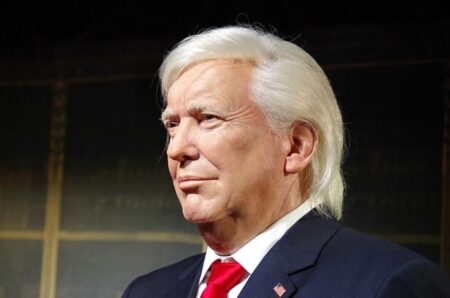
In a surprising escalation, former President Donald Trump has intensified his rhetoric regarding statehood threats, targeting Canada in a recent speech. Analysts warn that this provocative stance could strain U.S.-Canada relations amid ongoing geopolitical tensions.

In a recent statement, Canada’s new Prime Minister Mark Carney reaffirmed the nation’s sovereignty amidst escalating trade tensions with the U.S., declaring, “Canada will never be part of the US.� His remarks underscore a commitment to maintaining Canadian independence in negotiations.

Electricity imports from Canada will no longer incur surcharge fees following recent tariff negotiations. This change could lower costs for consumers in the U.S. and stabilize energy markets. Stakeholders are advised to stay informed as implications unfold.
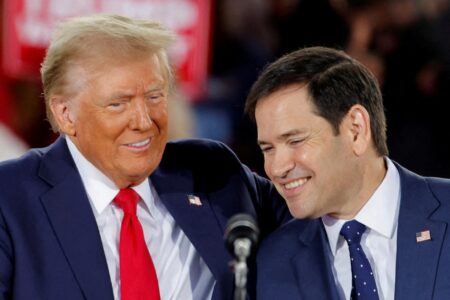
Senator Marco Rubio arrived in Canada for the G7 summit as tensions rise over tariffs between the U.S. and its allies. Discussions are expected to center on trade policies and their economic impacts, highlighting the complexities of international relations.

In a significant move, President Trump announced the postponement of tariffs on goods imported under the US-Mexico-Canada trade agreement. This decision aims to ease trade tensions and foster better economic relations among the North American partners.

Despite President Trump’s decision to postpone tariffs on various imports from Canada for a month, Canada will maintain its own tariffs on U.S. goods. This development highlights ongoing trade tensions between the two nations as negotiations continue.