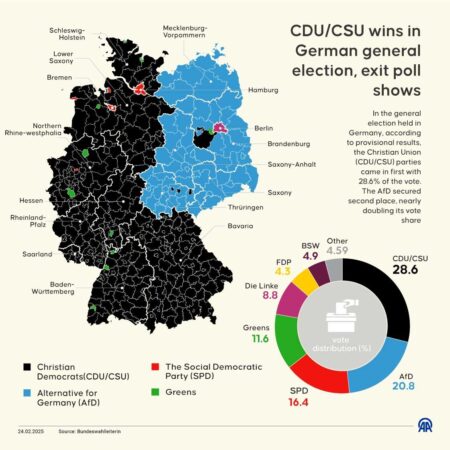
In a significant electoral shift, German conservatives celebrated a substantial victory, while the far-right party achieved historic success. This outcome reflects growing support for nationalist sentiments, reshaping Germany’s political landscape.
Browsing: political parties
Germany’s conservative party has secured victory in the latest elections, while the far-right Alternative for Germany (AfD) has surged to second place, according to exit polls. This shift signals a significant change in the nation’s political landscape.
Polls have officially opened in Germany for a crucial general election that could reshape the country’s political landscape. Voters will cast their ballots to determine the future direction of the government amid pressing economic and social challenges.
Young voters in Germany are increasingly turning to the far-right Alternative for Germany (AfD) party, driven by concerns over immigration, economic instability, and climate change. This shift marks a significant change in the political landscape, challenging traditional parties.
In “Meet Germany’s Far-Right Leader, a Study in Contradictions,” the New York Times explores the complex persona of the country’s right-wing figurehead. Examining his populist rhetoric alongside unexpected vulnerabilities, the article sheds light on the shifting political landscape in Germany.
As Germany approaches its pivotal election, parties concluded their campaigning with a series of final rallies. Leaders emphasized key issues such as climate policy and economic stability, aiming to sway undecided voters before the polls open.
As Germany approaches the final days before the election, political parties ramp up their campaigns, focusing on key issues such as climate policy, economic recovery, and social equity. Voter turnout and engagement will be critical in this crucial moment.