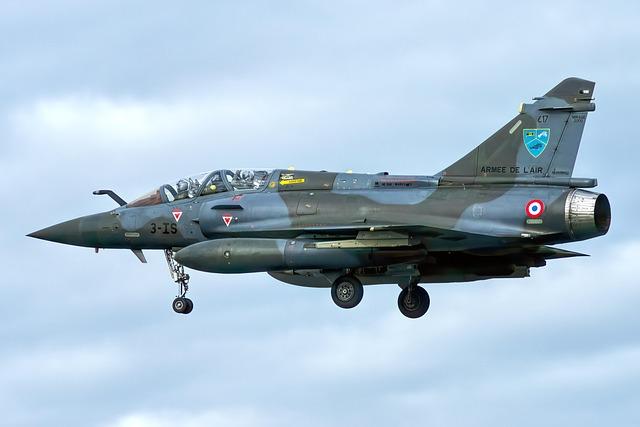
France is reportedly advancing a defense agreement with Greece that could result in the transfer of more than 40 Mirage fighter jets to Ukraine, marking a significant development amid ongoing regional security tensions. The potential deal underscores France’s strategic maneuvering in support of Ukraine while strengthening ties with a key NATO ally in the eastern Mediterranean. As the conflict in Ukraine continues to shape European defense policies, this move highlights the growing complexity of arms transfers and geopolitical alignments in the region.
France Advances Mirage Aircraft Deal with Greece Amid Rising Security Concerns
France is accelerating its military cooperation with Greece through a significant deal involving over 40 Mirage fighter jets amid escalating geopolitical tensions in Eastern Europe. This strategic move is seen as part of a broader effort to bolster NATO allies’ defensive capabilities, particularly in light of heightened security concerns stemming from Russia’s ongoing military activities. The agreement not only strengthens France’s position as a key arms supplier but also ensures that Greece enhances its air defense and combat readiness along critical Mediterranean and Balkan corridors.
Key elements of the deal include:
- Transfer of advanced Mirage 2000 jets to Greece, with potential upgrades and support services included.
- Possible redeployment of existing Greek Mirage aircraft to Ukraine, providing critical assistance to Kyiv’s air force.
- Expanded defense cooperation frameworks to address emerging threats in the region.
Experts suggest that this initiative underlines a concerted effort to maintain air superiority and deterrence capabilities in a changing security landscape, highlighting France’s role in NATO’s collective defense strategy.
Potential Impact of Mirage Deployment on Ukraine’s Air Defense Capabilities
The deployment of more than 40 Mirage aircraft to Ukraine could significantly strengthen the country’s air defense posture, providing a much-needed boost in airborne capabilities. These multirole fighters, known for their speed and agility, would enhance Ukraine’s ability to conduct both offensive and defensive air operations. Equipped with advanced radar and missile systems, the Mirages are expected to improve situational awareness and interception success rates against potential aerial threats. This infusion of modernized airframes would also serve to diversify Ukraine’s aerial assets, reducing reliance on older Soviet-era equipment and improving interoperability with Western defense systems.
Analysts highlight several key benefits that Ukraine might gain from the integration of Mirage jets:
- Increased aerial deterrence capability against hostile incursions.
- Enhanced precision strike potential through compatibility with Western munitions.
- Improved pilot training opportunities aligned with NATO standards.
- Strategic flexibility in responding to multifaceted threats from air and ground forces.
Together, these factors could alter the balance of power in Ukraine’s airspace, affording the nation a more credible defense umbrella amid ongoing regional tensions.
Strategic Recommendations for Integrating French Mirages into Ukrainian Forces
To optimize the deployment of French Mirage aircraft within Ukrainian forces, prioritizing pilot training and maintenance capabilities is essential. Given the complexity of the Mirage jet systems, Ukraine must swiftly establish training programs, potentially leveraging French and Greek expertise to accelerate the readiness of Ukrainian pilots. Concurrently, setting up dedicated maintenance hubs equipped with necessary parts and technical support will ensure operational sustainability. Integrating these aircraft into existing Ukrainian Air Force frameworks demands a phased approach, aligning aircraft delivery with infrastructure upgrades and crew preparedness.
Moreover, interoperability stands at the forefront of strategic implementation. The Mirages should be incorporated with existing NATO-compatible communication and targeting systems to enhance joint operational effectiveness. Ukraine’s command structure must also adapt to exploit the Mirages’ tactical advantages, such as multi-role capabilities in air superiority, reconnaissance, and precision strikes. This requires continuous intelligence sharing and updated mission planning to maximize the jets’ impact on the battlefield. The strategic partnership involving France and Greece could be pivotal in facilitating technology transfers and collaborative defense exercises, ensuring the Mirages become a force multiplier rather than just an addition to the fleet.
Key Takeaways
As negotiations between France and Greece advance, the potential transfer of more than 40 Mirage fighter jets to Ukraine marks a significant development in the ongoing conflict. This move underscores the shifting dynamics in European defense cooperation and highlights the increasing international support aimed at bolstering Ukraine’s military capabilities. Stakeholders will be closely watching how this deal unfolds and what implications it may have for regional security and the broader geopolitical landscape.