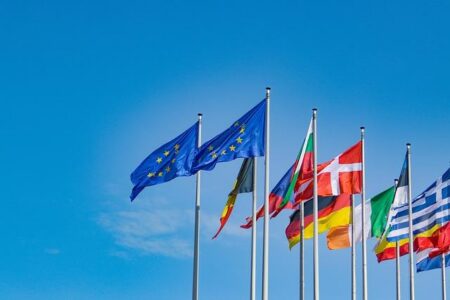
Former NATO Secretary General Anders Fogh Rasmussen has issued a stark warning regarding the future of Anglo-American ties, cautioning that the so-called “special relationship” between the UK and the United States is unlikely to improve even after the departure of former President Donald Trump. Speaking exclusively to The Independent, Rasmussen highlighted deep-seated challenges that extend beyond Trump’s presidency, suggesting that political and strategic divergences will continue to strain the historic alliance. This development raises critical questions about the future of transatlantic cooperation at a pivotal moment for both nations.
Challenges Facing US UK Ties Beyond Trump’s Presidency
Despite the departure of former President Trump, the longstanding alliance between the United States and the United Kingdom shows few signs of a quick revival to its previous stature. According to a former NATO chief, the relationship faces structural and strategic challenges that transcend individual leadership styles. Both nations grapple with shifting geopolitical priorities, including divergent approaches toward China, Russia, and the post-Brexit European landscape, which complicate efforts to restore seamless coordination. These complexities are compounded by domestic political turbulence on both sides of the Atlantic, making a swift return to the ‘special relationship’ an elusive goal.
Key factors undermining closer ties include:
- Strategic realignments in global security that demand disparate responses from Washington and London.
- Economic uncertainties prompted by new trade policies and regulatory divergences post-Brexit.
- The evolving nature of transatlantic diplomacy, weakened by reduced institutional engagement and trust erosion.
- Public sentiment and political narratives that continue to challenge traditional bipartisan support for the alliance.
These realities suggest that the US-UK partnership must undergo significant adaptation rather than expect a simple return to past norms, marking a new, more complex chapter in their bilateral ties.
Geopolitical Shifts Undermining Transatlantic Cooperation
Transatlantic relations have entered an era marked by deep uncertainty, as longstanding alliances face unprecedented challenges. The United States and Europe, once unified by shared values and strategic interests, now navigate a landscape altered by emerging powers and shifting priorities. Divergent approaches to global security, trade policies, and climate commitments have exacerbated tensions, undermining the previously robust framework of cooperation. This realignment signals a fundamental recalibration rather than a temporary disruption, with consequences reverberating across NATO and diplomatic channels.
Key factors destabilizing this partnership include:
- Rising multipolarity: The growing influence of China and Russia compels both sides to reassess their strategic dependencies and alliances.
- Economic nationalism: Protectionist policies and trade disputes have eroded trust, threatening the transatlantic economic foundation.
- Political fragmentation in Europe: Increasing domestic divisions weaken consensus on collective security and foreign policy.
- Shifting US foreign policy priorities: A focus on “America First” limits traditional commitments to European defense and multilateralism.
Strategic Steps Needed to Reinforce the Special Relationship
Restoring the alliance between the United States and the United Kingdom demands a concerted effort focused on rebuilding trust and aligning strategic priorities. Key to this process is enhancing diplomatic engagement through regular high-level dialogues that address emerging security threats and economic challenges. Both nations must prioritize transparent communication channels to avoid misunderstandings that could further strain this crucial partnership. Moreover, shared commitments to multilateral institutions and global stability should be reaffirmed, signaling a united front in an increasingly complex geopolitical landscape.
Practical measures to reinforce collaboration include:
- Joint military exercises designed to improve interoperability and readiness
- Coordinated responses to cyber threats and intelligence sharing enhancements
- Strengthening trade agreements that support mutual economic growth
- Investment in innovation and technology exchanges within defense and security sectors
Without decisive action on these fronts, the so-called ‘special relationship’ risks further deterioration, jeopardizing both nations’ global influence and security interests.
Key Takeaways
As the transatlantic alliance faces ongoing challenges, the warning from the former NATO chief underscores a sobering reality: the so-called ‘special relationship’ between the US and the UK may not recover its former strength anytime soon. Even with a change in administration, deep-seated political and strategic differences suggest a prolonged period of uncertainty for one of the West’s most enduring partnerships. Observers and policymakers alike will be watching closely to see how both sides navigate this complex landscape in the years ahead.