
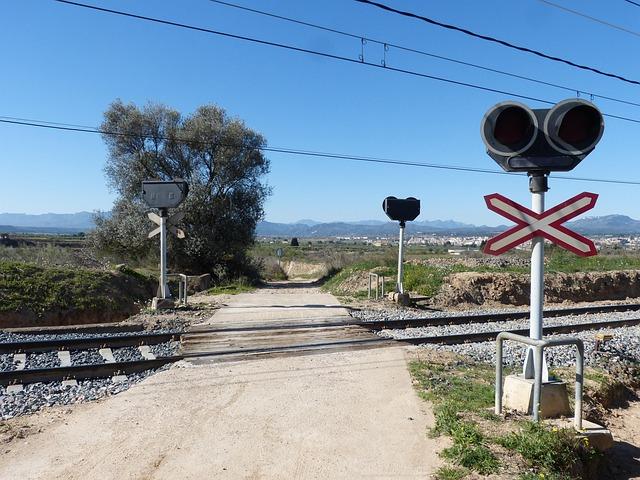
Russia has announced the closure of its railway border crossings with Finland, Estonia, and Latvia, escalating tensions with its neighboring European Union countries. The move, effective immediately, disrupts a key transportation link that has long facilitated trade and travel between Russia and the Baltic region. This development comes amid a backdrop of heightened geopolitical strain and raises concerns over the future of cross-border cooperation in Northern Europe.
Impact of Russia’s Closure of Railway Border Crossings on Regional Trade and Mobility
The abrupt closure of railway border crossings by Russia with Finland, Estonia, and Latvia is sending immediate shockwaves through the region’s trade networks. These routes, pivotal for the smooth transit of goods ranging from raw materials to finished products, now face significant disruption. Businesses that rely on these corridors are bracing for delays and increased transportation costs, as alternative routes tend to be longer and less efficient. The move also threatens to exacerbate supply chain vulnerabilities already strained by broader geopolitical tensions in Eastern Europe.
Beyond commerce, the impact on mobility is profound. Cross-border commuters, tourists, and freight operators find themselves navigating an increasingly complex landscape. The closures have sparked concerns about diminished economic connectivity and reduced people-to-people exchanges which are vital for regional cooperation. Key consequences include:
- Increased travel time and logistical hurdles for cross-border freight and passenger services.
- Heightened pressure on alternative transit points, potentially causing bottlenecks and congestion.
- Economic ripple effects in border communities dependent on daily cross-border activity.
These developments underscore the fragile nature of regional infrastructure amid shifting political landscapes.
Security Concerns and Political Implications Behind Russia’s Decision
Heightened security concerns have played a pivotal role in Moscow’s recent decision to close railway border crossings with Finland, Estonia, and Latvia. Russian authorities cite threats of espionage and cross-border sabotage as primary justifications for the move, reflecting an atmosphere of growing mistrust in the region. The shutdowns effectively limit civilian and commercial transit, amplifying fears among neighboring states of a further escalation in bilateral tensions. Analysts interpret this as a strategic measure by Russia to tighten control over its western frontiers amid uncertain geopolitical developments.
The decision carries significant political ramifications across the Baltic region and the European Union at large. By severing rail links, Russia disrupts critical transport corridors integral to both economic cooperation and regional connectivity. The closures are seen as a message of deterrence aimed at Finland, Estonia, and Latvia, signaling Moscow’s readiness to leverage infrastructure as a means of exerting pressure. Key implications include:
- Potential interruption of trade flows and supply chains affecting local economies
- Precedent for further restrictive measures against neighbors aligned with Western institutions
- Increased urgency for EU and NATO allies to bolster support and security frameworks in affected areas
Strategies for the EU to Mitigate Disruptions and Strengthen Border Resilience
In response to Russia’s abrupt closure of railway border crossings with Finland, Estonia, and Latvia, the European Union must prioritize a multifaceted approach to uphold supply chain integrity and safeguard regional stability. This includes enhancing infrastructure diversification, such as developing alternative transit corridors and investing in multimodal transport networks that reduce dependency on single routes vulnerable to geopolitical tensions. Accelerating digital cross-border customs procedures can also alleviate bottlenecks, allowing goods to flow more efficiently despite restricted rail access.
Furthermore, the EU should intensify cooperation among member states to establish joint contingency frameworks that support rapid response and resource allocation during disruptions. Exploring partnerships with non-EU neighbors and international organizations to secure alternative trade pathways will be critical. Key measures to consider include:
- Expanding capacity and maintenance of road and maritime ports to absorb diverted traffic
- Implementing real-time monitoring systems to anticipate and manage border pressures
- Strengthening legal and operational mechanisms for swift customs and security clearance
- Enhancing communication channels for cross-border crisis coordination
Final Thoughts
The closure of railway border crossings between Russia and its Baltic neighbors Finland, Estonia, and Latvia marks a significant escalation in the region’s ongoing geopolitical tensions. As authorities enforce these restrictions, the move is expected to further disrupt trade and travel, deepening economic and diplomatic divides. Observers will be closely monitoring the broader implications for European security and cross-border cooperation in the weeks ahead.