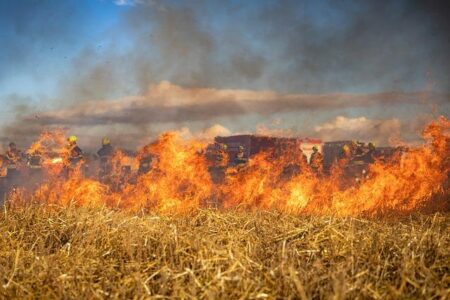
Parts of North America are currently shrouded in a thick haze, as wildfire smoke originating from Canada spreads across the continent. This widespread atmospheric phenomenon has raised concerns over air quality and public health from the United States to Canada. Reuters examines the causes behind the extensive wildfire activity in Canada and explains how the smoke is traveling so far, impacting millions of people along the way.
Canada’s Wildfires Fueling Widespread Air Quality Concerns Across North America
Recent wildfire outbreaks across Canada’s vast forested regions have unleashed massive plumes of smoke, traveling thousands of miles and enveloping major metropolitan areas in thick haze. Factors such as prolonged drought conditions, unusually high temperatures, and lightning strikes have intensified the frequency and severity of these fires. As a result, air quality indexes have plummeted in affected areas, triggering health warnings and raising alarms about the broader environmental repercussions.
The spread of smoke is influenced by prevailing wind patterns that carry fine particulate matter and pollutants from the burning forests deep into the United States and other parts of North America. Key contributors to the widespread air degradation include:
- Particulate matter (PM2.5): Tiny particles that penetrate deep into the lungs, posing serious health risks, especially for vulnerable groups.
- Ground-level ozone: Formed when wildfire emissions react with sunlight, worsening respiratory conditions.
- Disruption of normal atmospheric circulation: Allowing smoke to linger longer and reach urban centers far from the source.
Authorities are monitoring the situation closely and advising residents to limit outdoor activities, highlighting the urgent need for enhanced wildfire management and air quality mitigation strategies amid shifting climate patterns.
Meteorological Patterns Driving the Transboundary Smoke Dispersion
The expansive wildfire smoke originating from Canada’s vast forest fires is being transported across North America thanks to a complex interplay of atmospheric conditions. Predominantly, high-pressure systems hovering over the western regions create stable air masses that trap the smoke near the surface, allowing it to accumulate before being pushed eastward. Concurrently, prevailing westerly winds act as natural conveyors, steadily ferrying the smoke across provinces and international borders, impacting air quality in areas far removed from the original fire zones.
Several key meteorological factors contribute to this widespread dispersion:
- Jet Stream Patterns: The positioning of the jet stream serves as a powerful engine driving smoke plumes across the continent, often accelerating their movement toward the central and eastern United States.
- Atmospheric Stability: Temperature inversions can trap pollutants near the ground, intensifying haze and reducing visibility in affected regions.
- Local Wind Circulations: Daytime heating generates turbulent convection currents that mix smoke vertically, influencing its concentration and reach.
Understanding these atmospheric dynamics is crucial for anticipating air quality impacts and issuing timely health advisories for vulnerable populations.
Public Health Guidelines and Measures to Mitigate Smoke Exposure Risks
Health authorities across affected regions have issued clear guidelines to minimize the harmful effects of prolonged wildfire smoke exposure. Residents are advised to stay indoors as much as possible, keeping windows and doors sealed to prevent smoke infiltration. Air conditioning units should be set to recirculate indoor air rather than drawing outdoor air inside. To enhance indoor air quality, the use of high-efficiency particulate air (HEPA) filters is strongly recommended. Outdoor activities, especially strenuous exercise, should be limited or avoided, particularly for vulnerable groups such as children, the elderly, and those with pre-existing respiratory or cardiovascular conditions.
Governments and public health agencies have mobilized to provide real-time updates on air quality and safety tips through multiple channels, including social media, websites, and local news. Emergency cooling and clean air shelters are being set up in severely affected areas to offer respite to residents. Additionally, healthcare professionals encourage individuals exhibiting symptoms like persistent coughing, shortness of breath, or chest pain to seek prompt medical attention. The collective focus remains on empowering communities with knowledge and resources to reduce smoke-related health risks amid ongoing wildfire events.
To Wrap It Up
As wildfire season intensifies across Canada, the resulting smoke continues to drift across vast regions of North America, raising concerns over air quality and public health. Understanding the factors behind this pervasive haze-from prolonged drought and rising temperatures to shifting wind patterns-is crucial for preparing and responding to its ongoing impacts. Authorities and experts emphasize the need for coordinated action and increased awareness as these environmental challenges become more frequent and widespread.