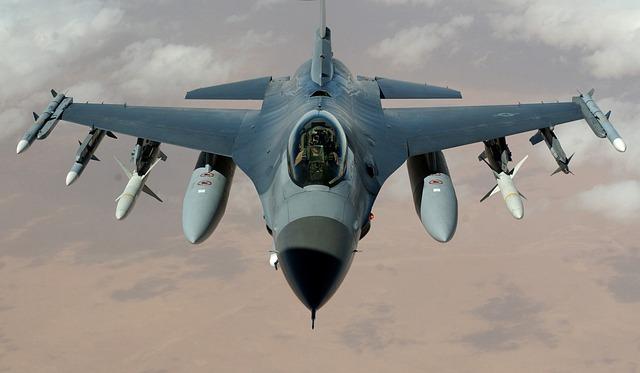
In a recent display of aerial prowess, the Chinese People’s Liberation Army Air Force (PLAAF) has conducted a series of war-game exercises putting its domestically produced J-16 fighter jets head-to-head against French-made Rafale aircraft. This high-profile drill, reported by the South China Morning Post, offers a rare glimpse into China’s advancing air combat capabilities and its efforts to benchmark its own technology against some of the world’s most advanced fighter jets. As regional tensions persist and military modernization accelerates, these exercises underscore the PLAAF’s commitment to refining its tactics and enhancing operational readiness in an increasingly competitive aerial environment.
J16s and Rafales Face Off in High-Stakes War-Game Simulation
In a recent high-intensity war-game simulation, the Chinese air force put its J-16 fighter jets head-to-head against the French Dassault Rafales, showcasing advanced aerial combat tactics amid rising regional tensions. The exercise tested both aircraft in various scenarios including air superiority missions, electronic warfare, and beyond-visual-range engagements. Analysts noted the strategic emphasis on leveraging the J-16’s integrated avionics and electronic countermeasure capabilities to challenge the Rafale’s well-established multirole adaptability.
Key highlights from the simulation included:
- J-16’s thrust vectoring technology allowing superior maneuverability in close-quarters dogfight scenarios.
- Rafale’s AESA radar system maintaining persistent target tracking and precision strike coordination.
- Cooperative tactics involving drone-aided reconnaissance and networked data sharing to enhance situational awareness.
Experts suggest that such simulated engagements not only sharpen pilot skills but also provide valuable insights into how next-generation air combat will unfold in contested airspaces.
| Feature | J-16 | Rafale |
|---|---|---|
| Maximum Speed | Mach 2.0 | Mach 1.8 |
| Combat Radius | 1,100 km | 1,390 km |
| Avionics | Integrated AESA radar & ECM | Thales RBE2 AESA radar |
| Armament Capacity | Up to 12,000 lbs | Up to 9,700 lbs |
Key Performance Metrics Reveal Strengths and Vulnerabilities of Both Jets
Combat simulations between the J-16 and the Rafale have spotlighted distinctive operational strengths and vulnerabilities that could shape aerial tactics in a potential conflict. The J-16 impresses with its raw power and extended combat radius, leveraging advanced avionics and robust payload capacity. However, its heavier frame somewhat compromises agility, making it more susceptible to the Rafale’s nimble maneuvering in close-quarter dogfights. Conversely, the Rafale excels in electronic warfare capabilities and sensor fusion, offering superior situational awareness that provides a tactical edge despite its relatively shorter range compared to the J-16.
Key performance indicators from the exercises are detailed in the table below, illustrating a nuanced comparison:
| Metric | J-16 | Rafale |
|---|---|---|
| Combat Radius (km) | 1,100 | 850 |
| Turn Rate (degrees/second) | 25 | 32 |
| Avionics Suite | Advanced, but heavier | Cutting-edge sensor fusion |
| Payload Capacity (kg) | 8,000 | 6,500 |
| Electronic Warfare | Effective | Superior |
- J-16’s advantage: Endurance and firepower, suited for long-range strike missions.
- Rafale’s advantage: Agility and advanced electronic warfare for tactical superiority.
- Vulnerabilities: J-16’s maneuverability constraints; Rafale’s limited fuel capacity.
Strategic Recommendations for Enhancing Air Combat Readiness in the Chinese Air Force
To elevate operational effectiveness, the Chinese Air Force must prioritize integrated multi-domain training, fostering seamless coordination between air, space, and cyber units. Emphasizing scenario-based war games that pit the J-16 against highly maneuverable adversaries such as the Rafale will sharpen tactical adaptability. Incorporating real-time data analytics and AI-driven decision support tools into exercises can highlight pilot response gaps and identify system vulnerabilities, ultimately driving targeted improvements in combat readiness.
Complementing advanced simulation, investment in enhanced logistical agility and rapid deployment capabilities is crucial. Optimized maintenance cycles and supply chain resilience will ensure that frontline squadrons maintain continuous sortie rates under intense operational tempos. The table below outlines critical focus areas for strategic enhancement:
| Focus Area | Recommended Action | Expected Impact |
|---|---|---|
| Multi-domain Integration | Joint training with cyber and EW units | Improved battlefield coordination |
| AI-enabled Analytics | Deploy real-time action feedback systems | Faster tactical decision-making |
| Maintenance & Logistics | Streamlined supply chain protocols | Higher aircraft availability |
| Rapid Deployment | Enhanced airlift and refueling operations | Increased sortie endurance |
Concluding Remarks
As the war-game exercises come to a close, the comparative performance of China’s J-16 and the French-built Rafale offers valuable insights into the evolving capabilities and strategic priorities of both air forces. While each aircraft demonstrates distinct strengths in maneuverability, avionics, and weapon systems, the drills underscore the intensifying focus on technological advancement and pilot proficiency amid shifting regional security dynamics. Observers will be watching closely as these developments influence future air power balances in Asia and beyond.