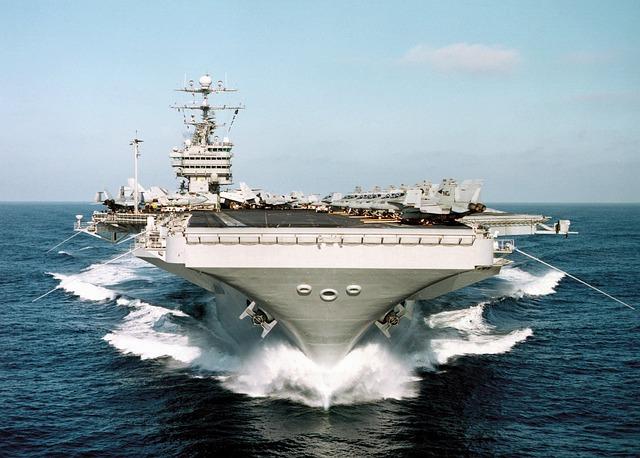
France has announced that its next aircraft carrier will be named “Free France,” honoring the legacy of the French Resistance during World War II. This decision reflects the country’s commitment to preserving its historical heritage while advancing its naval capabilities. As France prepares to enhance its maritime defense with this new flagship, the “Free France” symbolizes both national pride and strategic ambition in an evolving global security landscape.
Next French Aircraft Carrier Named Free France Reflects Historic Legacy
In a move steeped in historical reverence, the French Navy has announced that its forthcoming aircraft carrier will bear the name “Free France”, paying tribute to the resilient spirit of the Free French Forces during World War II. This decision not only underscores France’s commitment to honoring its past but also symbolizes the enduring values of freedom and resistance that defined the nation during one of its most challenging periods. The new vessel is expected to serve as a powerful emblem of national pride and determination, reflecting France’s ongoing dedication to protecting its sovereignty and interests on a global scale.
Beyond its symbolic importance, the upcoming carrier is set to incorporate cutting-edge technology and capabilities, positioning France at the forefront of naval aviation innovation. Key highlights include:
- Enhanced stealth features and radar systems
- State-of-the-art aircraft launch and recovery mechanisms
- Increased operational range and endurance for extended deployments
- Advanced defensive countermeasures to ensure mission success
As construction proceeds, the “Free France” will not only be a testament to historical legacy but also a crucial asset in France’s strategic defense architecture for decades ahead.
Strategic Capabilities and Modern Features of the Free France Carrier
The Free France carrier is poised to redefine naval power with its cutting-edge strategic capabilities, designed to boost France’s influence on the global maritime stage. Equipped with the latest generation of fighter jets, including the advanced Rafale F4, the carrier ensures air superiority and rapid deployment in various theaters of operation. Its enhanced stealth technology and integrated defense systems provide robust protection against modern threats, making it a formidable asset in both peacetime deterrence and combat scenarios. The vessel’s adaptability supports a wide range of missions, from humanitarian aid to high-intensity conflict, underlining France’s commitment to protecting its interests and allies worldwide.
Modern features of the Free France carrier include:
- State-of-the-art electromagnetic aircraft launch system (EMALS) for faster and more efficient aircraft deployment.
- Advanced radar and sensor suites offering unprecedented situational awareness and threat detection capabilities.
- Improved propulsion systems enhancing speed, endurance, and fuel efficiency for extended operational reach.
- Modular design allowing rapid upgrades and customization depending on mission requirements.
- Enhanced crew facilities and automation reducing personnel workload and increasing operational efficiency.
These innovations ensure that the Free France won’t just be another carrier; it will symbolize French technological prowess and strategic foresight for decades to come.
Recommendations for Enhancing France’s Naval Presence in the Indo-Pacific Region
To bolster France’s strategic footprint in the Indo-Pacific, a multifaceted approach is indispensable. First, accelerating the deployment of the new aircraft carrier “Free France” with integrated state-of-the-art drone technology and advanced stealth capabilities will be critical. Enhancing interoperability with allied navies, particularly those of Australia, India, and Japan, through joint exercises and shared intelligence platforms, will ensure a cohesive and agile response to regional challenges. Investment in upgrading naval bases in Réunion and New Caledonia to support extended operations is equally vital, ensuring that France can project power effectively across this vast maritime domain.
In addition to strengthening hardware and alliances, France should deepen diplomatic engagement with key Indo-Pacific nations by leveraging its historical and cultural ties. Promoting naval diplomacy through humanitarian missions and maritime security cooperation can foster goodwill and regional stability. Key recommendations include:
- Expanding maritime domain awareness through satellite surveillance and unmanned systems to monitor critical sea lanes and counter illicit activities.
- Investing in next-generation anti-submarine warfare capabilities to address evolving underwater threats.
- Enhancing logistical support networks by developing forward-operating bases and supply chains to sustain prolonged deployments.
- Prioritizing environmental resilience by incorporating eco-friendly technologies and practices in naval operations, aligning with global climate commitments.
Wrapping Up
As France moves forward with the development of its latest aircraft carrier, the decision to name it “Free France” underscores a deep historical resonance and national pride. Serving as a symbol of resilience and commitment to global maritime security, the new carrier is set to strengthen France’s naval capabilities well into the future. With construction underway, all eyes will be on how this flagship project shapes the nation’s defense posture in the decades ahead.