
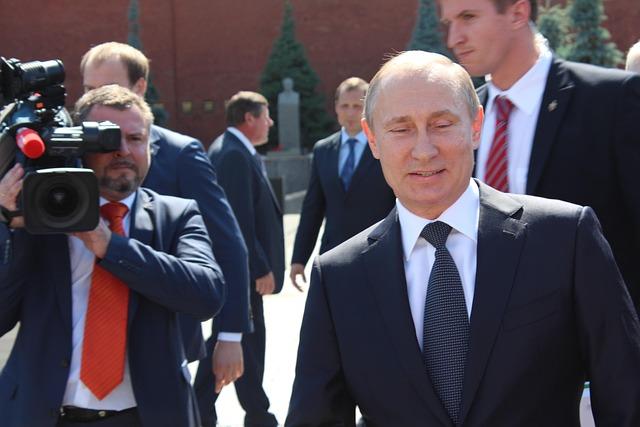
Russian President Vladimir Putin is set to arrive in Beijing just days after former U.S. President Donald Trump’s visit, highlighting China’s delicate diplomatic balancing act amid ongoing geopolitical tensions. As two of the world’s most influential leaders engage with China in rapid succession, Beijing faces the challenge of managing its strategic partnerships with both Moscow and Washington. This latest sequence of high-profile visits underscores China’s pivotal role on the global stage and its efforts to navigate competing interests between the East and the West.
Putin Arrives in Beijing Following Trump Visit Signaling China’s Diplomatic Tightrope
Russian President Vladimir Putin’s arrival in Beijing comes just days after former U.S. President Donald Trump’s high-profile visit, underscoring Beijing’s intricate diplomatic balancing act amidst growing global tensions. China’s leadership now faces the challenge of carefully managing its relationships with two of the world’s most influential and increasingly assertive powers, each with divergent agendas and expectations. The timing of these visits highlights Beijing’s strategic positioning as it seeks to maintain favorable ties without alienating either Moscow or Washington.
As Putin engages with Chinese officials, the agenda is expected to cover a range of issues, including energy cooperation, security coordination, and broader geopolitical strategy. Observers note that China is walking a diplomatic tightrope, aiming to leverage its growing clout while avoiding overt alignment that could provoke international friction. Key points under discussion likely include:
- Strengthening economic collaboration amid Western sanctions targeting Russia
- Joint approaches to regional security concerns particularly in Central Asia and the Indo-Pacific
- Maintaining open channels with the U.S. to navigate ongoing trade and technological disputes
Analyzing Beijing’s Strategy in Managing Rival Powers Amid Rising Global Tensions
As global tensions escalate, Beijing has adeptly positioned itself at the crossroads of significant power dynamics between Washington and Moscow. The recent back-to-back visits by Donald Trump and Vladimir Putin underscore China’s delicate and strategic effort to maintain influence without fully committing to either side. Leveraging its economic might and diplomatic channels, China aims to assert itself as a pivotal arbitrator, carefully managing its alliances to avoid alienating key partners while safeguarding its national interests.
Key facets of China’s approach include:
- Economic leverage: Utilizing trade and investment as tools of influence in bilateral relationships.
- Diplomatic balancing: Engaging in high-level talks with rival leaders to maintain open communication and avoid direct confrontation.
- Strategic ambiguity: Avoiding overt endorsements while promoting multilateralism to keep its options flexible.
This balancing act is indicative of Beijing’s broader strategy to enhance its global stature amid a rapidly evolving geopolitical landscape, where managing rival powers with finesse is crucial to maintaining regional stability and extending its international reach.
Recommendations for Navigating Sino-Russian and Sino-American Relations in a Shifting Geopolitical Landscape
In the evolving chessboard of global diplomacy, stakeholders must prioritize nuanced engagement over rigid alliances. For policymakers and analysts alike, understanding the distinct motivations that drive Beijing’s interactions with Moscow and Washington is critical. China’s approach is characterized by strategic flexibility-balancing economic interests with geopolitical pragmatism. To effectively navigate these relationships, it is essential to:
- Monitor shifts in trade policies and energy partnerships that underpin Sino-Russian cooperation
- Analyze the implications of U.S. diplomatic overtures on China’s regional ambitions
- Prioritize dialogue channels that accommodate China’s dual interest in maintaining strong ties without alienating either power
Moreover, cultivating resilience against external shocks requires anticipating Beijing’s adaptive strategies. Stakeholders should remain alert to signals indicating shifts in China’s prioritization between Moscow and Washington, particularly through economic frameworks like the Belt and Road Initiative or military collaborations. Articulating clear, consistent policies that respect China’s sovereignty while reinforcing international norms will be vital in reducing tensions and encouraging constructive dialogue. This balanced approach offers the best chance to sustain regional stability amid the complex interplay of great power ambitions.
In Retrospect
As President Vladimir Putin arrives in Beijing shortly after former President Donald Trump’s visit, China finds itself navigating a complex diplomatic landscape, striving to maintain strategic ties with both Washington and Moscow. This high-profile convergence underscores the ongoing challenges Beijing faces in balancing its interests amid shifting global power dynamics. Observers will be closely watching how China manages these relationships in the coming months, as the outcomes could have significant implications for international diplomacy and regional stability.