Moody's has upgraded Argentina's credit rating for the first time in five years, reflecting improved economic conditions and government reforms. Analysts view the move as a positive signal for investors, potentially fostering greater financial stability in the country.

Browsing: fiscal policy
Japan's Prime Minister faces mounting pressure to clarify the nation's controversial budget proposal amid concerns regarding military spending and social welfare cuts. Critics demand transparency as the government balances defense priorities with public needs.
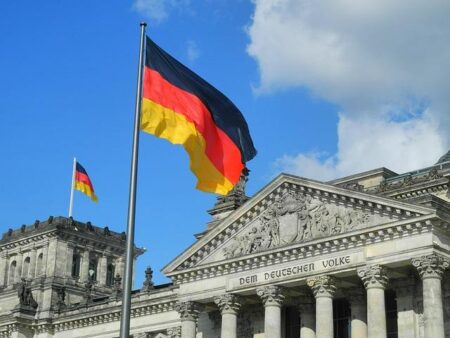
The German Parliament is currently engaged in heated debates over proposed reforms to the country's debt brake, a fiscal rule aimed at limiting government borrowing. As economic pressures mount, lawmakers are grappling with balancing fiscal responsibility and urgent public spending needs.
Germany, facing an economic downturn, is set to relax its strict debt brake rules, potentially allowing for increased government spending. This shift aims to stimulate growth and address pressing social and infrastructure needs amidst rising geopolitical tensions.
China’s new plan to boost consumer spending focuses on increasing household incomes, enhancing social security, and promoting digital payment systems. This multifaceted approach aims to stimulate domestic demand and support economic growth amid global uncertainties.
Cyclone Alfred is expected to adversely impact Australia's GDP for the March quarter, according to the Treasurer. The severe weather event has caused significant disruptions, highlighting the economic challenges posed by natural disasters in the region.
The UK economy showed signs of stagnation in January, highlighting the growing challenges for Shadow Chancellor Rachel Reeves. This downturn raises critical questions about the government's economic strategy and its impact on future growth.
Brazil's economy is projected to grow by 3.4% in 2024, driven by robust domestic demand. However, recent indicators of year-end weakness suggest that further interest rate hikes may be limited, prompting analysts to reassess monetary policy outlooks.
Spain's economy is projected to grow by 2.7% in 2025, driven primarily by strong private consumption, according to the central bank. This optimistic forecast highlights resilience in consumer spending as the country navigates post-pandemic recovery.
Italy has proposed a new initiative within the EU aimed at enhancing defense capabilities without increasing national debt. The plan involves leveraging EU guarantees, seeking to bolster security amidst rising geopolitical tensions.
Germany's political landscape shifted as major parties reached a landmark agreement on a historic debt deal. This pact aims to stabilize the economy, addressing rising concerns over public spending and economic recovery, while ensuring fiscal responsibility.
In a stark reversal from his optimistic forecasts, former President Trump now warns Americans of impending economic turbulence. As inflation rises and market volatility persists, many are questioning the sustainability of his earlier promises of a robust economic boom.
As Germany embraces expansive fiscal policies to stimulate its economy, questions arise about the implications for the Eurozone. Will its robust spending capacity create tensions among member states or lead to a stronger, more unified Europe?
Germany may face a recession due to potential U.S. tariffs, warns Bundesbank chief. The trade barriers could impact the country’s export-driven economy, raising concerns over growth prospects and prompting calls for policy adjustments.
Germany's finance minister, Christian Merz, faces a critical deadline to unveil a groundbreaking spending plan aimed at revitalizing the nation's economy. With just two weeks to act, the implications of his decisions could reshape fiscal policy for years to come.
Italy's escalating bond market tensions are shaping Prime Minister Giorgia Meloni's strategies across various sectors, from defense to banking. As yields rise, Meloni confronts a delicate balancing act between fiscal responsibility and political stability.
Germany's recent shift in fiscal policy marks a significant turnaround, as increased spending aims to bolster its economy and strengthen its role within the European Union. This move positions Germany back at the forefront of European decision-making.
The Bundesbank has acknowledged that increased German spending is justified in the current economic climate, yet it cautions that such measures alone will not resolve deeper structural issues. Experts urge a balanced approach to ensure sustainable growth.
Former Bank of Japan Governor Haruhiko Kuroda urged the government to address global perceptions that Japan is manipulating the yen. He emphasized that enhancing communication about monetary policy is crucial to dispel misunderstandings and maintain credibility.
Japan's largest union group is calling for the most significant wage increase since 1993, emphasizing the need to combat rising living costs and enhance worker livelihoods. This demand comes as inflation pressures mount, prompting a potential shift in corporate wage policies.