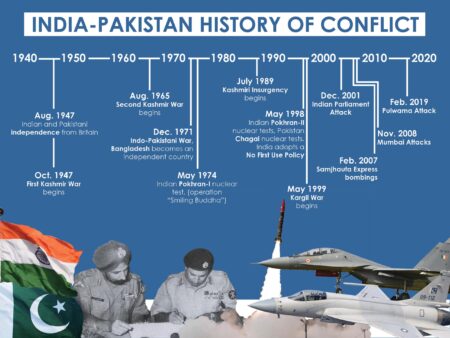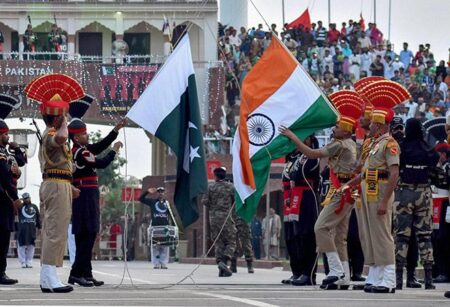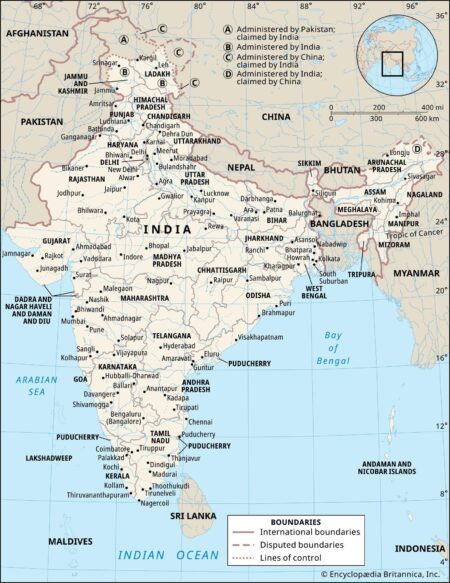
As tensions soar between India and Pakistan, fears grow over the possibility of a conflict spiraling into a full-scale war. Both nations are ramping up their military strength, while diplomatic relations continue to fray. The world watches with bated breath, anxious about what might unfold.
Browsing: South Asia
India is weighing a bold and contentious strategy to cut back on Pakistan’s water supply via an ambitious new project on the Indus River. If this plan moves forward, it could significantly heighten tensions between the two nations, which are already grappling with deep-rooted conflicts over vital water resources.
India is gearing up to champion international financial measures targeting Pakistan, as revealed by a reliable source. This strategic move underscores the rising tensions between the two nations, with India actively seeking global backing to tackle pressing issues related to terrorism financing.
In a troubling turn of events, India and Pakistan have reignited their accusations of ceasefire violations along the Line of Control, despite a recent agreement intended to ease tensions. Each nation is pointing fingers at the other for breaching the terms, heightening worries about stability in this volatile region.
Kashmir’s enduring conflict between India and Pakistan has, perhaps unexpectedly, paved the way for China to enhance its presence in the region. As tensions escalate, Beijing has skillfully seized this opportunity to bolster its economic and strategic influence, weaving itself deeper into the fabric of regional dynamics
Pakistan’s Prime Minister Shehbaz Sharif condemned India after a school bus attack in Balochistan left five people dead, including children. He accused India of supporting terrorism, escalating tensions between the two neighboring nations.
In the wake of India’s recent outreach to the Taliban, China has ramped up its diplomatic efforts with both Pakistan and Afghanistan. This gathering highlights the shifting regional dynamics and strategic interests at play, as countries strive to forge stronger alliances in an ever-evolving landscape of geopolitical tensions
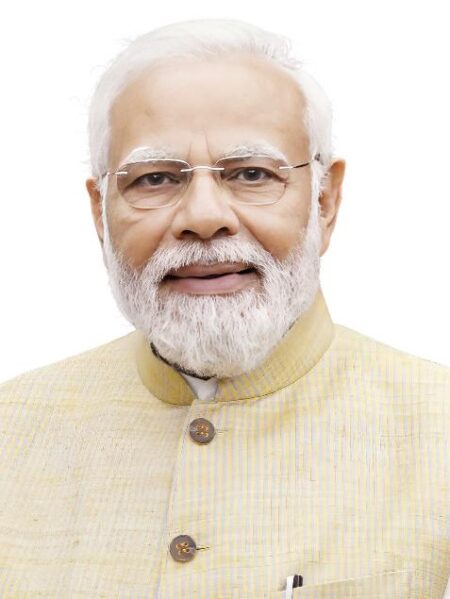
In “Modi’s Escalation Trap,” The Atlantic delves into the delicate power dynamics shaped by India’s Prime Minister Narendra Modi. With tensions mounting alongside its neighbors, experts caution that a confrontational stance might trigger unforeseen repercussions and spark regional instability
Pakistan has once again pledged its dedication to a ceasefire with India, highlighting a strong desire for lasting peace in the region. Yet, officials have issued a clear warning: any acts of aggression will be met with a swift and decisive response. They are calling for open dialogue as the key to ensuring stability and harmony.
India is keenly observing the evolving partnership between Pakistan and Bangladesh, as recent diplomatic interactions hint at a possible transformation in regional alliances. This intriguing development stirs concerns about the strategic landscape in South Asia, compelling India to reassess its foreign policy approach.
The simmering tensions between India and Pakistan have reached a boiling point, with both nations exchanging fierce attacks. This alarming escalation has sparked fears of a possible military confrontation between two nuclear-armed powers. Experts caution that the precarious situation could lead to devastating repercussions for regional stability.
In a bold and rapid diplomatic move, Pakistan has launched an exciting new global outreach initiative, just a day after India made its own announcement. This strategic maneuver highlights the intensifying rivalry between these neighboring nations as they race to bolster their international connections and expand their influence on the world stage.
In a breathtaking showdown that has ignited celebrations across the nation, Pakistan emerged victorious against India in a nail-biting match. This remarkable win not only elevates Pakistan’s status in the cricketing world but also reignites a sense of national pride, leaving fans buzzing with excitement for the epic clashes yet to come
The ongoing Kashmir crisis serves as a poignant reminder of the unresolved challenges stemming from the 1947 partition of India and Pakistan. With tensions continuing to simmer over territorial disputes, experts caution that this region remains a volatile flashpoint, illuminating the delicate balance of peace between these two nations.
In a dramatic turn of events, India has initiated airstrikes against Pakistan, raising alarm bells among global experts. Analysts are sounding the warning about possible regional instability and are calling for urgent diplomatic efforts to prevent further escalation. The future for both nations hangs in the balance, shrouded in uncertainty.
India and Pakistan have ramped up tensions, trading accusations over a string of drone attacks along their disputed border. With both nations ramping up military operations, fears are mounting about the possibility of an escalating conflict in this volatile region.
The recent downing of an Indian fighter jet serves as a stark reminder of the evolving challenges faced by modern military forces. Analysts are sounding the alarm on vulnerabilities within air defense systems, emphasizing the urgent need for innovative tactics to counter escalating aerial threats in contested regions. This incident underscores the importance of adapting strategies to stay one step ahead in an increasingly complex battlefield.
Pakistan is ramping up its military capabilities by integrating advanced Chinese weaponry, a move that has sparked significant concern in New Delhi. Analysts are keeping a vigilant eye on this development, as it has the potential to reshape regional power dynamics and heighten tensions between these two nuclear-armed nations.
Under Prime Minister Modi’s leadership, India’s military doctrine has experienced a remarkable evolution, focusing on modernization and self-reliance. This strategic shift is designed to bolster deterrence capabilities and position India as a dominant force in the ever-changing landscape of regional security
India has boldly dismissed China’s recent move to rename several locations in Arunachal Pradesh, a region steeped in border disputes. New Delhi firmly asserted that this area is an inseparable part of India, strengthening its stance amidst the rising tensions between the two nations.