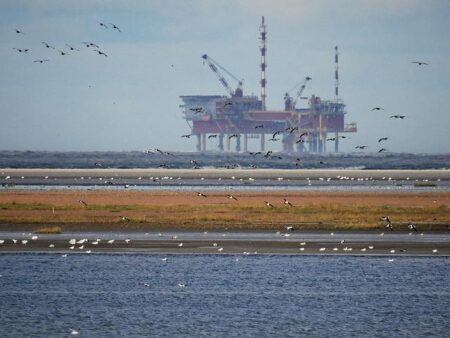

Sanctions relief has provided a significant boost to Russia’s war efforts, as soaring oil revenues underpin the country’s military expenditures amid ongoing conflict. Recent shifts in the global crude oil market have seen prices rise, enabling Moscow to capitalize on increased export earnings despite international efforts to curtail its financial resources. This development raises fresh concerns over the effectiveness of sanctions regimes designed to hamper Russia’s ability to sustain its war machine, highlighting the complex interplay between energy markets and geopolitical tensions.
Sanctions Relief Boosts Russia’s Oil Revenues Amid Ongoing Conflict
Recent adjustments in international sanctions have significantly bolstered Russia’s oil sector, allowing the nation to capitalize on elevated crude prices despite the ongoing geopolitical strife. With certain financial restrictions eased, Russian exporters have regained access to critical markets, fueling a sharp increase in oil revenues. This influx of capital is proving crucial in sustaining Moscow’s military operations, as oil remains a central pillar of the country’s economic stability amid the conflict.
Key factors contributing to this surge include:
- Expanded oil export quotas facilitated by sanction relief.
- Increased demand from major buyers willing to navigate revised trade constraints.
- Higher benchmark prices driven by global supply uncertainties.
Industry analysts warn that this financial windfall could extend the duration and intensity of the conflict, as revenues provide Moscow with enhanced fiscal flexibility. Meanwhile, global markets continue to grapple with the implications of these shifting dynamics, underscoring the fragile balance between economic interests and geopolitical pressures.
Increased Crude Oil Income Fuels Military Expansion and Strategic Operations
Russia’s surge in crude oil revenues following partial sanctions relief has significantly bolstered its defense budget, enabling accelerated military expansion and enhanced operational capabilities. The influx of cash allows for increased procurement of advanced weaponry, modernization of existing arsenals, and scaling up of troop deployments across strategic theaters. Analysts note that the government is leveraging these financial gains to strengthen its position both regionally and globally, with a focus on maintaining strategic depth and readiness in the face of ongoing geopolitical tensions.
Key areas benefiting from this financial windfall include:
- Upgrading missile systems: Accelerated development and deployment of next-generation ballistic and cruise missiles.
- Expanding naval presence: Investment in new vessels to enhance control over critical maritime routes.
- Enhancing cyber and electronic warfare: Increased funding directed towards cutting-edge technology and operational units.
- Recruitment and training: Boosting personnel strength and readiness through expanded recruitment drives and advanced training programs.
Such advances reflect a concerted effort by Moscow to capitalize on the strategic flexibility afforded by elevated oil income, sustaining its long-term military ambitions despite international challenges.
Calls for Stricter Enforcement and Targeted Measures to Curtail Revenue Streams
Amid rising concerns over the indirect benefits Russia continues to reap from eased sanctions, experts and policymakers are urging a rigorous overhaul of current enforcement mechanisms. Calls are growing louder for more aggressive monitoring of oil exports, with emphasis on improving transparency and tracking of financial flows. Analysts argue that without targeted interventions, Russia’s ability to finance its military operations remains dangerously intact, effectively undermining the intended impact of sanctions.
Key proposals gaining traction include:
- Enhanced satellite surveillance to identify and disrupt illicit tanker movements.
- Strengthened international cooperation for real-time information sharing among customs and border agencies.
- Stringent scrutiny of financial institutions suspected of facilitating opaque transactions linked to oil revenues.
- Implementation of targeted sanctions on intermediaries exploiting loopholes in the supply chain.
Experts warn that without decisive action, the incremental inflow of oil revenues may prolong the conflict and complicate diplomatic efforts aimed at resolution.
In Summary
As sanctions relief ushers in increased oil revenues for Russia, concerns mount over the potential bolstering of its military capabilities amid ongoing conflict. The surge in crude oil prices has provided Moscow with a critical financial lifeline, enabling sustained operations despite international efforts to curtail its war apparatus. Moving forward, global policymakers face the complex challenge of balancing market stability with the imperative to limit resources that may fuel further unrest.