India has just received its very first LNG cargo through the Strait of Hormuz, ushering in an exciting new era for its energy imports. This landmark event follows a recent deal and signals a strategic shift in response to evolving geopolitical landscapes, reports OilPrice.com's latest crude oil update
Browsing: Crude Oil Prices
Japan's crude import price in May skyrocketed to a record high in yen terms, Reuters reports, driven by soaring oil costs amid the escalating Middle East conflict. This dramatic surge underscores mounting inflationary pressures that are increasingly straining the economy
Major oil companies are accelerating their investments in Argentina's Vaca Muerta shale formation, competing to boost production amid soaring global crude prices. This region is rapidly emerging as a dominant force in the energy market
Australia's LNG industry is raising the alarm: ongoing policy uncertainty is scaring off vital investments, putting production timelines at risk in an already unpredictable global energy market. Industry leaders are calling on the government to deliver clear, decisive direction to safeguard the sector's future growth
Japan is set to receive its first crude oil shipment via the Strait of Hormuz since the conflict began, marking a significant shift in supply routes amid soaring global prices. The world's eyes are now fixed on the crude oil markets, eager to see how this pivotal development will impact the industry
Two India-bound LPG tankers have expertly navigated the Strait of Hormuz amid escalating regional tensions. This seamless transit offers a much-needed boost to energy markets, as crude oil prices remain steady with slight gains today
China has begun exporting fuel amid tightening supplies across Asia, sending ripples through regional markets. This bold shift underscores the evolving landscape of the crude oil trade, as prices respond to surging demand and dwindling inventories
Sanctions relief has turbocharged Russia's oil revenues, fueling its war machine as crude prices skyrocket. Despite growing global pressure, this flood of cash is supercharging Moscow's military power, making it increasingly difficult to rein in the conflict
India has begun paying for Iranian oil in yuan, leveraging a U.S. waiver to bypass traditional dollar transactions amid ongoing sanctions. This daring shift signals a major change in global payment dynamics, sending shockwaves through today's crude oil markets
The UK now joins Germany, France, China, Japan, and others in facing a major tourism crisis. As crude oil prices surge beyond $100 per barrel, travel expenses are soaring, threatening to stall the rebound of tourism across Europe and Asia
China's 2026 energy strategy is powered by five exciting trends: a swift surge in renewable energy adoption, a bold increase in domestic crude production, an expansion of LNG imports, breakthroughs in cutting-edge energy technologies, and the strengthening of global oil partnerships
Discounts on Iranian crude oil have deepened in China as independent refiners, known as teapots, pull back from buying amid mounting financial pressures and tighter regulations, sources told Reuters-revealing a slowdown in demand in this vital market
Germany has decisively turned down the idea of splitting Europe's power market into zones, asserting that this approach would jeopardize both market efficiency and stability. This bold stance emerges during a critical period of discussions surrounding energy security and pricing, especially in light of the ever-changing crude oil prices
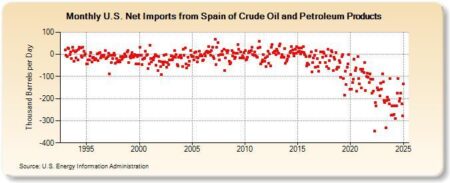
Spain’s Oil Imports from Venezuela Surge 60% Ahead of U.S. Sanctions Amid Shifting Global Energy Dynamics
In a notable shift in energy trade dynamics, Spain has ramped up its oil imports from Venezuela, witnessing a staggering 60% increase as the looming prospect of U.S. sanctions raises concerns among other buyers regarding supplies from the South American nation. This surge underscores Spain’s strategic move to secure a stable source of crude oil amid volatile global markets and the ongoing repercussions of geopolitical tensions. With U.S.sanctions on Venezuela set to tighten, spain’s approach not only highlights its reliance on Venezuelan oil but also reflects a broader trend among European nations seeking to diversify their energy portfolios in an era of uncertainty. As crude oil prices fluctuate in response to these developments,the implications for both Spain’s energy security and the global oil market remain to be seen.