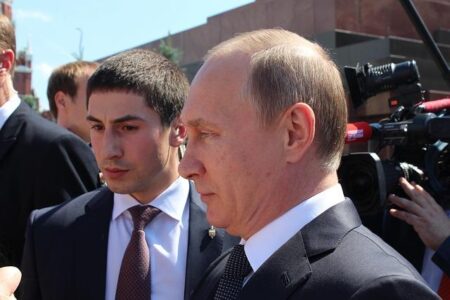
In a remarkable development signaling potential shifts in Russia’s political landscape, a former top government official has publicly acknowledged that the country is growing weary of President Vladimir Putin’s prolonged rule. Speaking candidly to Fortune, the ex-official expressed that many Russians can now “imagine a future without him,” challenging long-held assumptions about Putin’s unassailable grip on power. This rare admission offers fresh insight into the mounting internal pressures facing Russia’s leadership amid ongoing domestic and international challenges.
Former Top Russian Official Signals Shift in Political Loyalty
In a striking departure from his previous political stance, a former high-ranking Russian official has publicly expressed disenchantment with Vladimir Putin’s leadership, signaling a potential shift in the country’s political landscape. During a recent interview, he acknowledged the growing fatigue within Russia’s elite circles and the wider population, stating that many can now envision a future without Putin’s dominance. This admission marks one of the most candid critiques from inside the former regime’s inner circle, highlighting cracks in the once-solid support base surrounding the Kremlin.
Experts suggest that this newfound openness may indicate underlying tensions among Russia’s political class, as well as a realignment of loyalties ahead of upcoming power struggles. Key points emphasized by the official include:
- The erosion of public trust in long-term governance under Putin.
- The desire among younger bureaucrats and politicians for reform and change.
- The potential emergence of alternative leadership figures within Russia’s political hierarchy.
With such statements gaining traction, international observers are closely monitoring how these internal dynamics might influence Russia’s domestic and foreign policies moving forward.
Analyzing the Implications of a Post Putin Russia
The admission from a former top Russian official signaling a collective fatigue with Vladimir Putin’s prolonged rule marks a pivotal moment in Russia’s political landscape. This candid acknowledgment not only reflects growing undercurrents of dissent within the elite but also highlights a broader societal shift. For decades, Putin has been synonymous with Russian identity and governance, but the emerging narrative suggests an increasing willingness to envision alternative leadership that could redefine the country’s domestic and international trajectory.
Key implications of this development include:
- Potential for Political Reform: A post-Putin Russia may open doors to reforms aimed at decentralizing power and enhancing democratic institutions, though the path remains uncertain.
- Economic Realignment: New leadership might pursue different economic strategies, possibly recalibrating relationships with global markets and addressing systemic challenges.
- Geopolitical Shifts: The Kremlin’s foreign policy stance could undergo significant changes, potentially easing tensions with the West or reshaping alliances in the Eurasian region.
As the country contemplates this unprecedented transition, the interplay between entrenched political forces and emerging factions will be critical in determining whether Russia can chart a stable and progressive future beyond Putin’s shadow.
Strategic Recommendations for Navigating Russia’s Evolving Leadership Landscape
In light of recent remarks from a former senior Russian official signaling a potential shift away from Vladimir Putin’s long-standing grip on power, it is imperative for international stakeholders to recalibrate their engagement strategies. The evolving narrative within Russia suggests a growing openness to envisioning governance beyond the current leadership, creating openings to foster dialogue with emerging political factions and civil society groups. Key recommendations include:
- Expanding diplomatic channels to include non-traditional players who may influence post-Putin policy directions.
- Strengthening intelligence frameworks to monitor internal power realignments and potential succession scenarios.
- Promoting economic partnerships that support diversification away from state-centric sectors, boosting resilience against political upheaval.
Additionally, businesses and governments alike should prioritize flexibility and scenario planning to mitigate risks associated with an unpredictable transition. Emphasizing transparent communication and cultural sensitivity will be critical for maintaining influence and fostering stability during this uncertain period. By proactively adapting to Russia’s shifting political climate, stakeholders can better position themselves to capitalize on emerging opportunities while safeguarding long-term interests.
Insights and Conclusions
The admission by a former top Russian official underscores a growing sentiment within some segments of the country’s political elite that the era of Vladimir Putin’s leadership may be drawing to a close. As Russia faces mounting internal and external challenges, such candid acknowledgments could signal a shift in the nation’s future direction. Observers will be closely watching how these developments unfold and what they might mean for Russia’s domestic stability and its role on the global stage.